
Epoxy Flooring Contractors in Austin: 2026 Complete Guide to Pricing, Contractors, and Market Trends
Quick Answer
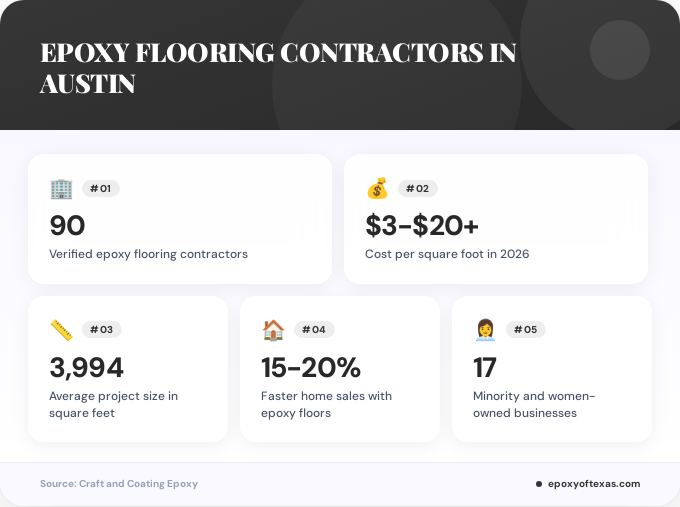
Austin has 90 verified epoxy flooring contractors, including 10 minority-owned and 7 women-owned businesses. Industrial epoxy flooring costs range from $3 to $20+ per square foot in 2026, with pricing dependent on surface preparation, system type, and project scope. Recent Austin projects average 3,994 square feet, with the local market experiencing 15-20% faster home sales when epoxy garage floors are installed.
When searching for epoxy flooring contractors in Austin, property owners face a thriving market with unprecedented growth and diversity. Austin’s construction boom, fueled by population growth and commercial development, has created robust demand for durable, aesthetically appealing flooring solutions. Did you know that homes with professionally installed epoxy garage floors in Austin sell 15-20% faster than comparable properties? This statistic alone demonstrates the transformative impact of quality epoxy work on property value.
The epoxy flooring industry in Austin represents a microcosm of broader national trends, with 90 active, verified contractors serving residential, commercial, and industrial clients. As the global epoxy flooring market expands from $662 million in 2025 toward a projected $1,110 million by 2031, Austin contractors are positioned at the intersection of innovation, sustainability, and craftsmanship. Understanding this landscape helps property owners make informed decisions that balance cost, quality, and long-term value.
Whether you’re upgrading a garage in Zilker, installing commercial flooring in the Domain, or outfitting an industrial facility in East Austin, this comprehensive guide provides the data-driven insights you need to navigate the epoxy flooring market with confidence.
What Is the Epoxy Flooring Contractor Landscape in Austin?
The contractor ecosystem for epoxy flooring in Austin is remarkably diverse and competitive. According to verified bidding data from Downtobid, 90 active epoxy flooring contractors currently operate throughout the Austin metropolitan area. These contractors undergo verification based on bidding activity, response times, and project preferences, ensuring a baseline of professionalism and reliability.
The diversity within Austin’s contractor network reflects broader industry equity initiatives. The breakdown includes 80 non-union contractors, providing flexibility for various project types and budgets. Notably, 10 minority-owned businesses and 7 women-owned businesses contribute to the competitive marketplace, offering specialized expertise and perspectives that benefit Austin’s diverse property ownership base.
Recent project data reveals that 18 tracked epoxy flooring projects in Austin averaged 3,994 square feet each, spanning commercial tenant improvements, residential garage upgrades, and industrial warehouse applications. Examples include Austin Painting and Drywall (78759), which specializes in commercial tenant improvements alongside epoxy installation work. City-funded public works projects have also incorporated epoxy-coated concrete, particularly in kitchen flooring upgrades for municipal facilities.
For homeowners considering epoxy solutions, professional epoxy installation services offer comprehensive solutions tailored to Austin’s unique climate considerations, including heat resistance for our notorious summer temperatures that regularly exceed 100°F.
How Much Does Epoxy Flooring Cost in Austin in 2026?
Pricing for epoxy flooring in Austin varies widely based on multiple factors, making it essential to understand the cost drivers before requesting quotes. In 2026, industrial and commercial epoxy flooring ranges from $3 to $20+ per square foot, with residential applications typically falling within a similar spectrum depending on complexity and finish quality.
The low end of this range ($3-$5 per square foot) typically covers basic epoxy coatings with minimal surface preparation, suitable for light-traffic areas or temporary installations. Mid-range pricing ($8-$12 per square foot) encompasses most residential garage applications and moderate commercial spaces, including proper surface preparation, high-quality epoxy systems, and basic decorative options like color flakes or metallic finishes.
| Application Type | Price Range (per sq ft) | Typical Lifespan |
|---|---|---|
| Basic Coating | $3-$5 | 5-8 years |
| Standard Residential | $8-$12 | 10-15 years |
| Premium/Industrial | $15-$20+ | 15-20 years |
Premium installations ($15-$20+ per square foot) deliver high-performance systems designed for heavy industrial use, chemical resistance, or complex decorative finishes like 3D metallic effects. These systems often include multiple coats, specialized primers, and protective topcoats that extend lifespan to 15-20 years with proper maintenance.
Several factors influence where your project falls within this pricing spectrum. Surface condition plays a critical role, as damaged concrete requiring extensive repair or leveling adds $2-$8 per square foot to baseline costs. Austin’s clay-rich soil can create foundation movement issues that must be addressed before epoxy installation. Project size also affects pricing, with economies of scale reducing per-square-foot costs on larger installations above 1,000 square feet.
“Pricing varies significantly based on your specific project requirements, existing substrate conditions, and performance expectations. We always recommend in-person assessments to provide accurate quotes that reflect the true scope of work, particularly in Austin where foundation movement and moisture issues require specialized preparation techniques.”
Labor costs in Austin run approximately $22-$32 per hour for experienced flooring professionals, representing a 15-20% premium over the Texas state average. This reflects Austin’s higher cost of living and competitive labor market, particularly for skilled tradespeople with epoxy-specific certifications and experience.

What Are the Current Market Trends for Epoxy Flooring?
The epoxy flooring industry is experiencing significant growth both globally and locally in Austin. The global epoxy flooring market was valued at $604 million in 2024, expanding to $662 million in 2025, with projections reaching $1,110 million by 2031. This represents a compound annual growth rate (CAGR) of 9.3%, driven by increasing demand in manufacturing, healthcare, automotive, and commercial real estate sectors.
Austin’s construction boom directly correlates with this global trend. The city’s light rail project, with contractor selection scheduled for 2027 starts, exemplifies large-scale infrastructure investment that creates spillover demand for commercial and industrial flooring solutions. Companies like McKinstry opening new Austin offices signal corporate expansion that requires specialized flooring installations for warehouses, showrooms, and manufacturing facilities.
Several key trends are shaping the epoxy flooring market in 2026:
- Sustainable formulations: Low-VOC (volatile organic compound) epoxy systems now dominate Austin installations, meeting increasingly stringent environmental regulations and indoor air quality standards.
- Digital integration: Advanced application techniques using laser leveling and moisture mapping ensure precision installations that maximize longevity.
- Decorative innovation: Metallic epoxies, 3D effects, and custom color matching have transformed epoxy from purely functional to design-forward solutions.
- Manufacturing dominance: Manufacturing facilities represent the largest end-user segment globally, requiring chemical-resistant, high-traffic flooring that withstands industrial processes.
Austin-specific trends reflect the city’s unique character. Residential epoxy installations in neighborhoods like Tarrytown, Westlake, and Barton Creek increasingly feature premium decorative finishes that complement high-end home aesthetics. Commercial properties in the Domain and downtown Austin prioritize sleek, modern epoxy floors that project professionalism while offering exceptional durability.
How Do You Choose the Right Epoxy Flooring Contractor in Austin?
Selecting the right contractor among Austin’s 90 verified options requires careful evaluation of credentials, experience, and project fit. The verification process used by bidding platforms considers response times, project completion rates, and specialty areas, but property owners should conduct additional due diligence.
Start by verifying contractor certifications and insurance. OSHA safety certifications demonstrate commitment to workplace safety, particularly important for commercial and industrial projects. Manufacturer-specific certifications from major epoxy brands indicate advanced training and access to premium product lines. General liability insurance ($1-2 million minimum) and workers’ compensation coverage protect property owners from liability during installation.
Review portfolio projects similar to your planned installation. A contractor excelling at residential garage floors may lack experience with large commercial installations requiring specialized equipment and techniques. Request references from projects completed within the past 12-24 months, and follow up with those property owners about timeline adherence, communication quality, and post-installation performance.
Manufacturer Training
Insurance Coverage
BBB Rating
Project Portfolio
Client References
Specialty Areas
Warranty Terms
Communication Style
Post-Install Support
Timeline Estimates
Material Selection
Preparation Requirements
Request detailed written estimates that itemize surface preparation, materials, labor, and additional services. Beware of significantly low bids that may indicate corner-cutting on preparation or use of inferior materials. Premium contractors invest substantial time in surface preparation, which accounts for 40-60% of project success. This includes concrete grinding, crack repair, moisture testing, and proper priming.
Consider contractors’ familiarity with Austin-specific challenges. Foundation movement from expansive clay soils, high humidity during summer months, and temperature extremes all impact epoxy installation success. Experienced Austin contractors account for these factors in their preparation and material selection processes.
What Are the Benefits of Epoxy Flooring for Austin Properties?
Epoxy flooring delivers compelling advantages for both residential and commercial properties in Austin, explaining its growing popularity across diverse applications. The performance characteristics that make epoxy ideal for industrial settings translate effectively to residential garages, commercial showrooms, and retail spaces.
Durability stands as epoxy’s primary advantage. Properly installed epoxy systems withstand the heavy loads, chemical exposures, and thermal cycling that characterize Austin’s climate and usage patterns. Residential garages benefit from resistance to hot tire pickup, oil stains, and the impacts of tools and equipment. Commercial facilities appreciate epoxy’s ability to handle forklift traffic, foot traffic from thousands of daily visitors, and the occasional spills or impacts inherent to business operations.
Chemical resistance makes epoxy particularly valuable for automotive applications, manufacturing facilities, and healthcare environments. Austin’s numerous automotive service businesses, craft breweries, and food production facilities require flooring that resists acids, solvents, oils, and cleaning chemicals without degrading or staining.
Low maintenance requirements appeal to busy property owners and facility managers. Unlike porous concrete that requires regular sealing and stain removal, epoxy floors clean with simple mopping using mild detergents. The seamless surface eliminates grout lines and joints where dirt and bacteria accumulate, making epoxy floors ideal for medical facilities, commercial kitchens, and cleanroom environments.
Real estate professionals in Austin have documented that homes with epoxy garage floors sell 15-20% faster than comparable properties without this upgrade. The visual appeal of a pristine, showroom-quality garage floor creates positive first impressions that influence buyer decisions. This faster sale velocity often justifies the installation investment, particularly in competitive neighborhoods throughout Austin.
Aesthetic versatility allows epoxy to complement virtually any design vision. Modern metallic epoxies create stunning visual effects that transform garages into showcase spaces. Commercial applications can incorporate corporate colors, logos, and wayfinding elements directly into floor designs. The glossy finish characteristic of epoxy installations brightens spaces by reflecting light, reducing lighting costs in commercial facilities.
What Challenges Face the Epoxy Flooring Industry in 2026?
Despite robust growth projections, the epoxy flooring industry faces significant challenges that impact contractors and property owners alike. Skilled labor shortages top the list of concerns, with experienced epoxy installers in high demand nationwide. This shortage manifests in Austin through extended project timelines, higher labor costs (15-20% above state averages), and quality variability among less experienced installers entering the market to meet demand.
The industry has responded with enhanced training programs and certification initiatives. Manufacturer-sponsored workshops provide hands-on training in surface preparation, mixing protocols, application techniques, and troubleshooting common issues. These programs aim to expand the qualified installer base while maintaining quality standards that protect both contractors and property owners.
Material cost volatility presents ongoing challenges, with epoxy resin prices fluctuating based on petroleum market dynamics and global supply chain factors. While contractors can sometimes absorb minor price variations, significant increases necessitate project quote adjustments or margin compression that affects business sustainability.
Regulatory compliance requirements continue expanding, particularly around VOC emissions and worker safety. Austin’s environmental consciousness drives demand for low-VOC formulations, which sometimes carry premium pricing or require modified application techniques. Contractors must invest in proper ventilation equipment, personal protective equipment, and disposal protocols that add operational costs but ensure worker safety and environmental protection.
Climate-related installation challenges affect Austin contractors year-round. Summer temperatures exceeding 100°F accelerate epoxy cure times, requiring adjustments to working methods and sometimes necessitating evening or early morning installations. High humidity during spring and fall can interfere with proper epoxy curing, requiring dehumidification equipment for optimal results. These climate considerations add complexity that less experienced contractors may underestimate.
People Also Ask
How long does epoxy flooring installation take in Austin?
Most residential garage epoxy installations in Austin complete within 2-4 days, including surface preparation, application, and curing time. Commercial projects averaging 3,994 square feet typically require 5-10 days depending on complexity, with larger industrial installations extending to 2-3 weeks for multi-coat systems.
Can epoxy flooring withstand Austin’s extreme summer heat?
High-quality epoxy systems withstand Austin’s summer temperatures exceeding 100°F when properly installed and cured. Premium formulations include UV-stable topcoats that prevent yellowing from sun exposure, and heat-resistant properties that maintain bond strength and surface integrity throughout seasonal temperature cycles.
What maintenance does epoxy flooring require?
Epoxy floors require minimal maintenance consisting of regular sweeping or dust mopping and periodic wet mopping with mild, pH-neutral cleaners. Avoid abrasive cleaning tools that can scratch the surface, and address spills promptly to prevent potential staining, though properly sealed epoxy resists most common household chemicals.
Are epoxy floors slippery when wet?
Standard glossy epoxy can be slippery when wet, but contractors address this through anti-slip additives mixed into topcoats or broadcast onto the final layer. Commercial installations and outdoor applications typically include these slip-resistant features to meet safety standards and reduce liability concerns.
How do I prepare my space for epoxy flooring installation?
Clear the installation area completely, removing all vehicles, storage items, and movable equipment. Professional contractors handle concrete cleaning and repairs, but property owners should identify any drainage issues, foundation cracks, or moisture problems beforehand. Ensure adequate ventilation access and discuss climate control needs with your contractor, particularly for summer installations in Austin.
What warranty should I expect from Austin epoxy contractors?
Reputable contractors typically offer 5-10 year warranties covering delamination, peeling, and manufacturing defects, though specific terms vary by contractor and system type. Premium installations may include longer warranty periods, while basic coatings carry shorter coverage. Always request warranty details in writing before project commencement.
Frequently Asked Questions
How much does epoxy flooring cost per square foot in Austin?+
Epoxy flooring in Austin ranges from $3 to $20+ per square foot depending on system type, surface preparation requirements, and finish complexity. Basic coatings start at the lower end, while premium decorative or industrial-grade systems command higher pricing reflecting enhanced durability and aesthetic value.
How long does epoxy flooring last in Austin’s climate?+
Properly installed epoxy flooring lasts 10-20 years in Austin with appropriate maintenance. Premium systems with UV-stable topcoats and heat-resistant formulations withstand Austin’s temperature extremes and intense sun exposure, while basic coatings may require recoating every 5-8 years depending on traffic levels.
What is the best time of year to install epoxy flooring in Austin?+
Spring (March-May) and fall (September-November) offer ideal conditions for epoxy installation in Austin, with moderate temperatures and lower humidity that facilitate proper curing. Summer installations require climate control and timing adjustments, while winter’s mild temperatures generally work well though occasional cold snaps may extend cure times.
Can epoxy flooring be applied over existing concrete in Austin homes?+
Yes, epoxy can be applied over existing concrete provided the surface is structurally sound, free of significant cracks or foundation movement, and properly prepared. Austin contractors assess moisture levels, repair damage, and grind the surface to ensure optimal adhesion, addressing clay soil-related foundation issues that may affect long-term performance.
Do I need permits for epoxy flooring installation in Austin?+
Residential epoxy flooring installations typically do not require permits in Austin, as they are considered cosmetic improvements rather than structural modifications. Commercial and industrial projects may require permits depending on scope, occupancy changes, or modifications to existing drainage systems, so consult with your contractor and Austin’s Development Services Department.
What are the most popular epoxy flooring colors and finishes in Austin?+
Austin homeowners favor neutral grays and tans with color flake systems for residential garages, while commercial spaces often select sleek solid grays or custom colors matching corporate branding. Metallic epoxies in silver, copper, and blue tones have gained popularity for high-end residential and retail applications seeking distinctive visual impact.
How do I verify an epoxy flooring contractor’s credentials in Austin?+
Verify contractor licensing through the Texas Department of Licensing and Regulation, check insurance coverage certificates directly with providers, and review Better Business Bureau ratings for complaint history. Request manufacturer certifications, review portfolio projects, and contact recent client references to assess work quality and professionalism before making your selection.
Key Takeaways
- Austin hosts 90 verified epoxy flooring contractors, including 10 minority-owned and 7 women-owned businesses, offering diverse options for residential, commercial, and industrial projects averaging 3,994 square feet.
- 2026 pricing ranges from $3 to $20+ per square foot, with costs dependent on surface preparation, system complexity, and performance requirements rather than fixed averages.
- The global epoxy flooring market grows at 9.3% CAGR, expanding from $662 million in 2025 toward $1,110 million by 2031, driven by manufacturing, commercial, and residential demand.
- Properly installed epoxy floors last 10-20 years in Austin’s climate when UV-stable, heat-resistant formulations are used with appropriate surface preparation and maintenance.
- Homes with epoxy garage floors sell 15-20% faster in Austin’s competitive real estate market, demonstrating measurable return on investment beyond functional benefits.
- Skilled labor shortages and climate challenges affect installation timelines and costs, with Austin contractors commanding 15-20% labor premiums over state averages due to competitive demand.
- Sustainable low-VOC formulations dominate 2026 installations, meeting environmental regulations while delivering the durability, chemical resistance, and low maintenance that define quality epoxy systems.
Selecting the right epoxy flooring contractor in Austin requires balancing cost considerations with quality expectations, verifying credentials, and understanding how local climate and soil conditions impact installation success. The city’s diverse contractor base offers options for every project type and budget, from basic residential garage coatings to sophisticated commercial and industrial installations.
As Austin continues its rapid growth trajectory, demand for durable, attractive, and sustainable flooring solutions will only intensify. Property owners who invest in professional epoxy installations today position themselves to benefit from enhanced property values, reduced maintenance burdens, and spaces that perform reliably for decades to come.
Ready to transform your Austin property with professional epoxy flooring? Contact Epoxy of Texas for a comprehensive assessment and custom quote tailored to your specific project requirements, timeline, and performance expectations.