
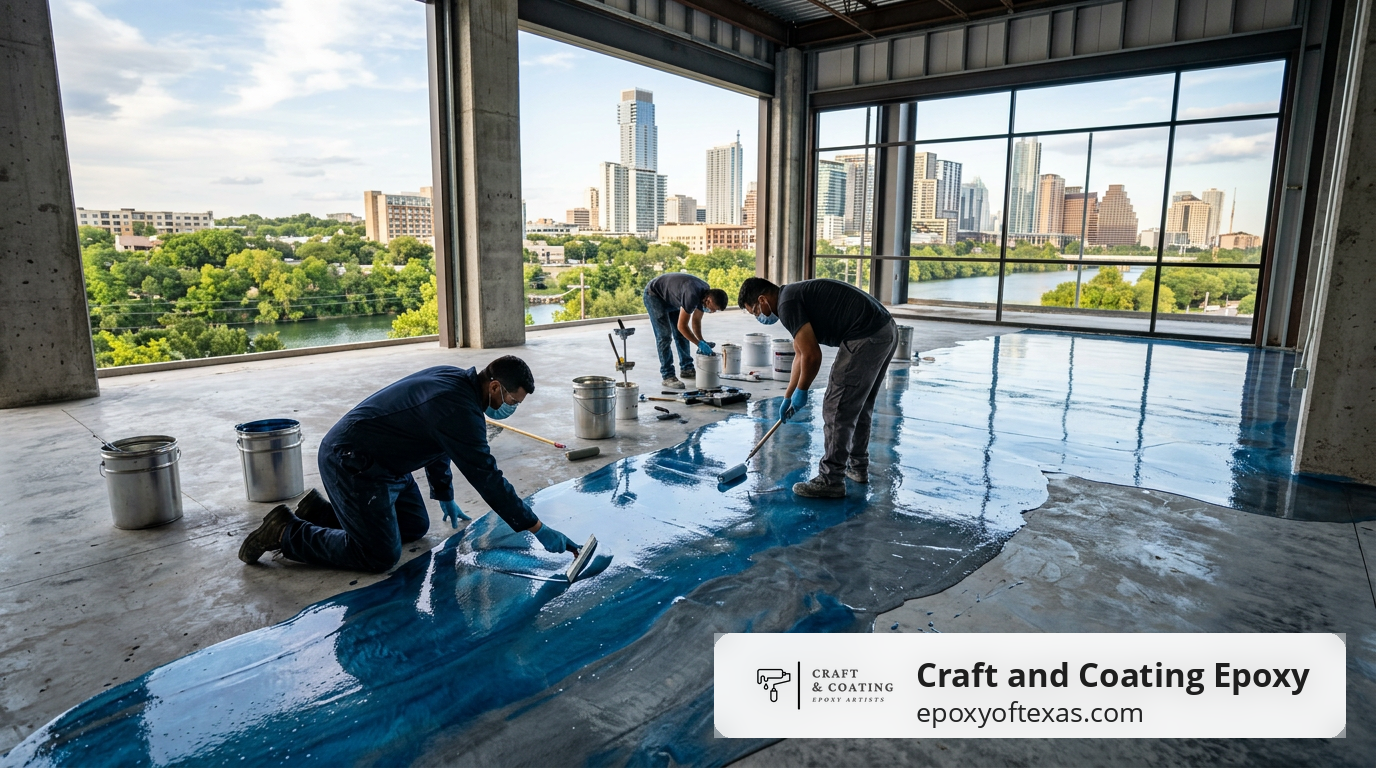
Epoxy Floor Installation in Austin TX: Complete Guide to Costs, Process & Best Practices
Quick Answer
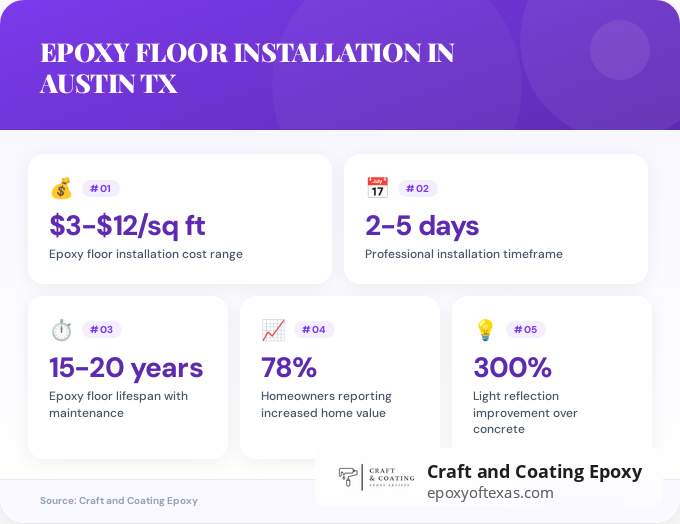
Epoxy floor installation in Austin TX typically costs between $3 to $12 per square foot depending on coating type, surface preparation needs, and design complexity. Professional installations in Austin garages, commercial spaces, and industrial facilities take 2-5 days and can last 15-20 years with proper maintenance in Central Texas climate conditions.
Did you know that 78% of homeowners who install epoxy flooring in their garages report increased home value and buyer interest? In Austin’s competitive real estate market, where properties in neighborhoods like West Lake Hills and Tarrytown command premium prices, epoxy flooring has become more than just a protective surface. It’s a strategic investment.
The Central Texas heat, sudden temperature swings, and occasional flooding make floor durability critical. Whether you’re protecting a garage workspace in Mueller, upgrading a commercial warehouse near Circuit of The Americas, or creating a stunning showroom floor in the Domain, understanding epoxy floor installation in Austin TX is essential for making informed decisions.
This comprehensive guide draws from industry data, local installer insights, and real project outcomes to help you navigate every aspect of epoxy flooring, from initial cost considerations to long-term maintenance strategies specific to Austin’s unique conditions.
What Is Epoxy Floor Installation and Why Austin Properties Need It?
Epoxy floor installation involves applying a thermosetting resin coating system directly to concrete surfaces, creating a chemical bond that transforms ordinary concrete into a durable, attractive, and functional floor. Unlike paint that simply sits on top of concrete, epoxy penetrates and bonds at a molecular level, creating a surface that can withstand heavy traffic, chemical spills, and environmental stress.
The two-component system consists of resin and hardener that, when mixed, trigger a chemical reaction called curing. This process typically takes 24-72 hours to reach full hardness, depending on ambient temperature and humidity levels. In Austin’s climate, where summer temperatures regularly exceed 95°F, installers often work during early morning hours to optimize curing conditions.
Austin property owners choose epoxy flooring for several compelling reasons. The material resists oil stains, tire marks, and chemical damage common in garages and workshops. It reflects light, brightening spaces by up to 300% compared to bare concrete. The seamless surface eliminates dust creation from concrete degradation, a significant benefit in Austin’s dry conditions where dust accumulation can be problematic.
How Does Austin’s Climate Affect Epoxy Floor Performance?
Austin’s climate presents unique challenges and opportunities for epoxy floor installations. The region experiences hot, humid summers with temperatures reaching 100°F+ and relatively mild winters with occasional freezes. This temperature variation affects both installation timing and long-term performance.
High humidity levels during summer months (often 60-80% in mornings) require careful moisture testing before installation. Concrete slabs can trap moisture that rises through the surface, potentially causing epoxy delamination if not properly addressed. Professional installers in Austin routinely perform calcium chloride tests or use moisture meters to ensure concrete moisture levels stay below 3% before application.
The intense UV exposure in Central Texas also influences product selection. While garage floors remain protected, outdoor applications or areas with significant sunlight exposure require UV-stable formulations to prevent yellowing and degradation. Many Austin installers recommend polyaspartic topcoats for their superior UV resistance compared to traditional epoxy systems.
“Austin’s temperature swings create unique challenges for epoxy installations. We’ve seen concrete expand and contract significantly between seasons, which is why proper surface preparation and using flexible epoxy systems designed for Texas conditions makes all the difference in longevity,” notes a senior installer with over 15 years of experience in Central Texas markets.
Flash flooding, particularly in areas near Onion Creek and the Colorado River, makes water resistance another critical factor. Quality epoxy installations create impermeable barriers that protect concrete from water damage and prevent foundation issues that could cost thousands to repair.
What Factors Influence Epoxy Floor Installation Costs in Austin TX?
The cost of epoxy floor installation in Austin TX varies significantly based on multiple factors, with pricing typically ranging from $3 to $12+ per square foot. Understanding these cost drivers helps property owners budget appropriately and evaluate quotes from different contractors.
Surface preparation represents the most significant variable in project costs. A new, smooth concrete slab requires minimal prep, while an older floor with cracks, oil stains, or uneven sections demands extensive grinding, patching, and cleaning. Some Austin properties, particularly in older neighborhoods like Hyde Park or Clarksville, have concrete slabs from the 1950s-1970s that require substantial remediation work.
Coating type dramatically affects pricing. Basic solid color epoxy systems start at the lower end of the range, while metallic epoxy finishes, decorative flakes, or multi-layer systems with custom designs can push costs significantly higher. Commercial installations requiring chemical-resistant formulations or food-grade certifications also command premium pricing.
| Cost Factor | Impact on Price | Typical Range |
|---|---|---|
| Surface Preparation | High | $1-$3 per sq ft |
| Epoxy System Type | Very High | $2-$8 per sq ft |
| Design Complexity | Medium to High | $0-$4 per sq ft |
Project size also influences per-square-foot costs, with larger installations benefiting from economies of scale. A 2,000 square foot commercial warehouse typically costs less per square foot than a 400 square foot residential garage due to setup efficiencies and material bulk pricing.
Pricing varies based on your specific project requirements, surface condition, desired finish, and timeline. Premium installations emphasize proper preparation, high-quality materials, and skilled craftsmanship that ensure longevity, especially important in Austin’s demanding climate. For accurate pricing tailored to your property, contacting professional installers for custom quotes provides the most reliable budget information.
What Are the Different Types of Epoxy Flooring Systems?
Several epoxy flooring systems serve different needs, budgets, and aesthetic preferences. Understanding these options helps Austin property owners select the right solution for their specific application.
Solid Color Epoxy represents the most straightforward system, offering a uniform, glossy finish in various colors. This option works well for residential garages, workshops, and commercial spaces prioritizing functionality over decorative appeal. The system typically includes a primer coat, pigmented epoxy base, and clear topcoat for UV protection and enhanced durability.
Decorative Flake Systems incorporate colored vinyl chips broadcast into wet epoxy, creating texture and visual interest. These systems hide dirt and imperfections better than solid colors while providing slip resistance. Austin installers often recommend flake systems for garage floors because they handle the area’s frequent dust and pollen without showing every particle.
Metallic Epoxy creates stunning, three-dimensional effects resembling marble, ocean waves, or molten metal. This premium option has gained popularity in Austin showrooms, retail spaces, and upscale residential applications. The installation requires significant skill as installers manipulate the metallic pigments while the epoxy remains workable, creating unique patterns impossible to replicate exactly.
Durability: 15-20 years
Maintenance: Very low
Cost Range: $3-$6 per sq ft
Durability: 15-20 years
Maintenance: Low
Cost Range: $5-$8 per sq ft
Durability: 15-20 years
Maintenance: Medium
Cost Range: $8-$15+ per sq ft
Durability: 20+ years
Maintenance: Low
Cost Range: $7-$12 per sq ft
Industrial/Commercial Grade Systems feature thicker mil builds (10-20 mils versus 3-5 mils for residential) and specialized formulations for chemical resistance, extreme temperature tolerance, or specific industry requirements. Food processing facilities, automotive shops, and manufacturing spaces in Austin’s growing industrial sector typically require these heavy-duty systems.
Each system can be customized with various topcoats including polyurethane or polyaspartic finishes that provide additional UV protection, faster cure times, or enhanced chemical resistance. Professional installers at https://epoxyoftexas.com can help determine which system best matches your performance requirements and aesthetic vision.
What Does the Epoxy Floor Installation Process Involve?
Professional epoxy floor installation in Austin TX follows a systematic process that typically spans 2-5 days depending on project size, complexity, and curing requirements. Understanding each phase helps property owners prepare adequately and set realistic expectations.
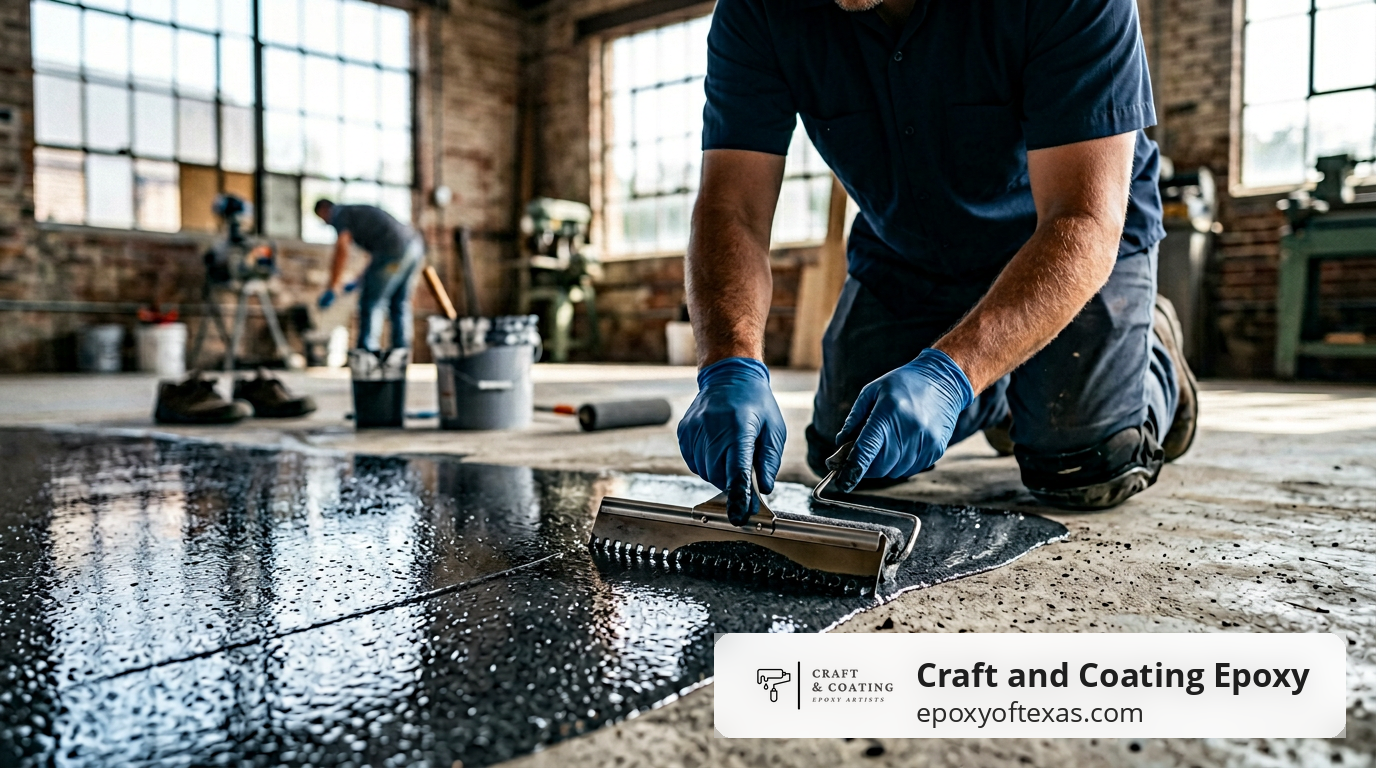
Phase 1: Surface Assessment and Preparation begins with thorough concrete inspection, checking for moisture issues, structural cracks, and surface contamination. Installers use diamond grinding equipment to open concrete pores, remove existing coatings, and create the proper surface profile for epoxy adhesion. This mechanical preparation generates significant dust, so proper containment and ventilation are essential.
Crack repair and surface leveling follow grinding. Epoxy-based patching compounds fill expansion joints and repair damaged areas. In Austin properties with foundation movement (common in areas with expansive clay soils like parts of South Austin), addressing these structural issues before coating application prevents future delamination.
Phase 2: Cleaning and Priming involves meticulous removal of all dust, oils, and contaminants. Industrial vacuums and tack cloths ensure complete cleanliness. Many installers apply degreasing agents followed by water rinses, then allow 24-48 hours for complete drying. Moisture testing confirms the concrete is ready for coating.
Primer application creates the bond between concrete and subsequent epoxy layers. Professional installers back-roll primers to ensure complete penetration and eliminate air bubbles. In Austin’s porous limestone-based concrete common in Hill Country areas, primer absorption can be significant, sometimes requiring additional coats.
Phase 3: Base Coat and Decorative Elements involves mixing and applying the main epoxy layer. Installers work in sections, maintaining wet edges to prevent visible seams. For flake systems, decorative chips are broadcast while epoxy remains tacky, then excess chips are scraped after curing. Metallic systems require special manipulation techniques to achieve desired effects.
Phase 4: Topcoat and Curing adds the protective final layer that provides UV resistance, chemical protection, and enhanced durability. Clear polyurethane or polyaspartic topcoats typically cure faster than epoxy base coats, with light foot traffic possible within 24 hours and full vehicle use after 72 hours. Austin’s warm temperatures generally accelerate curing compared to northern climates.
How Do Residential and Commercial Installations Differ?
While the fundamental chemistry remains consistent, residential and commercial epoxy floor installations in Austin differ significantly in scope, requirements, and performance specifications.
Residential installations primarily focus on garages, patios, basements, and occasionally interior living spaces. These projects typically range from 400-1,200 square feet and emphasize aesthetics alongside functionality. Homeowners in neighborhoods like Circle C Ranch or Steiner Ranch often select decorative options that complement their home’s style and increase property value.
Residential projects generally accommodate homeowner schedules, often completed over long weekends to minimize disruption. The coating systems used in homes typically feature 3-7 mil thickness, adequate for personal vehicle traffic and household use. Warranties commonly extend 5-10 years for residential applications.
Commercial installations demand higher performance standards to withstand heavy traffic, equipment loads, and specific industry requirements. Warehouses near Austin-Bergstrom International Airport, manufacturing facilities in the growing tech corridor, and retail spaces in downtown Austin require robust flooring solutions that maintain appearance and function under demanding conditions.
Commercial projects often span 5,000-50,000+ square feet, requiring larger installation crews and industrial equipment. These applications typically use thicker coating systems (10-20 mils) with enhanced chemical resistance, faster cure formulations to minimize business downtime, and slip-resistant additives for safety compliance.
| Aspect | Residential | Commercial |
|---|---|---|
| Typical Size | 400-1,200 sq ft | 5,000-50,000+ sq ft |
| Installation Time | 2-3 days | 3-7+ days |
| Coating Thickness | 3-7 mils | 10-20 mils |
| Primary Focus | Aesthetics & Function | Durability & Performance |
Commercial installations also face regulatory requirements including VOC (Volatile Organic Compound) limits, slip coefficient ratings for safety compliance, and sometimes industry-specific certifications like USDA approval for food facilities. Austin’s building codes and commercial property standards influence product selection and installation methods.
Which Austin Neighborhoods See the Most Epoxy Floor Installations?
Epoxy floor installation trends in Austin TX reflect the city’s diverse neighborhoods and their distinct characteristics. Understanding these patterns helps property owners see how epoxy solutions fit different community needs.
West Austin neighborhoods including Tarrytown, Westlake Hills, and Rob Roy see significant high-end residential installations. These areas feature luxury homes where homeowners invest in premium metallic epoxy finishes and custom designs that complement six-figure home renovations. Garage spaces in these neighborhoods often serve as extensions of living areas, demanding attractive, durable flooring solutions.
South Austin communities like Circle C Ranch, Sendera, and Meridian have experienced rapid growth with newer construction featuring spacious three-car garages. These neighborhoods see strong adoption of decorative flake systems that balance aesthetics with family-friendly durability. The area’s active outdoor culture means garage floors frequently handle bikes, sports equipment, and DIY project workspace needs.
North Austin, particularly developments around the Domain and areas near major tech campuses, features both residential and commercial installations. The concentration of technology workers and growing commercial spaces creates demand for professional-grade flooring in home workshops and corporate facilities alike.
East Austin’s revitalization has brought epoxy flooring to renovated warehouses, artist studios, and converted industrial spaces. These applications often embrace the industrial aesthetic, using polished concrete preparation with clear epoxy sealers or minimal decorative elements that preserve the raw, authentic character these neighborhoods celebrate.
Commercial concentrations exist near Austin-Bergstrom International Airport, along the I-35 corridor, and in the growing development around Circuit of The Americas. These areas house warehouses, logistics facilities, and automotive businesses where heavy-duty epoxy systems protect concrete from constant traffic and operational demands.
How Do You Maintain Epoxy Floors in Austin’s Climate?
Proper maintenance extends epoxy floor lifespan from 15 to 20+ years in Austin’s climate. The region’s specific environmental conditions require targeted care strategies that differ from maintenance protocols in other climates.
Regular cleaning forms the foundation of epoxy maintenance. Sweep or dust mop frequently to remove Central Texas dust, cedar pollen, and tracked-in debris that can scratch the surface over time. Use pH-neutral cleaners diluted according to manufacturer specifications, avoiding harsh chemicals or acidic solutions that can dull the finish.
For deeper cleaning, use soft-bristle brushes or microfiber mops with warm water and mild detergent. Austin’s hard water contains minerals that can leave residue, so many property owners use water softeners or add white vinegar to final rinse water to prevent spotting. Commercial facilities often implement automated scrubbing systems for large areas.
Protection strategies prevent damage before it occurs. Place absorbent mats near garage entrances to catch automotive fluids before they contact epoxy. Use furniture pads under heavy equipment, workbenches, and storage units to prevent point-loading that can crack or chip the coating. For vehicle storage, consider rubber tire mats during hot Austin summers when tire plasticizers can stick to epoxy in extreme heat.
Address spills immediately, particularly automotive fluids, battery acid, or chemical cleaners. While quality epoxy resists most substances, prolonged exposure to aggressive chemicals can compromise even premium coatings. Wipe spills with absorbent materials and clean the area with appropriate cleaners.
Periodic recoating maintains appearance and protection. High-traffic areas may show wear after 5-7 years despite proper maintenance. Professional recoating involves light surface abrasion and applying fresh topcoat layers, typically costing 30-40% less than complete reinstallation while extending floor life significantly.
Austin’s intense summer heat requires special attention. Avoid dragging sharp objects across floors when concrete beneath expands in extreme temperatures. Keep garage doors closed during peak heat to minimize UV exposure in partially open areas and moderate temperature extremes that stress the coating system.
What Should You Look for When Choosing an Austin Epoxy Installer?
Selecting the right contractor for epoxy floor installation in Austin TX significantly impacts project outcomes, longevity, and overall satisfaction. Several critical factors separate professional installations from substandard work that fails prematurely.
Experience and specialization matter tremendously in epoxy flooring. Look for contractors who focus specifically on epoxy and concrete coatings rather than general contractors offering flooring as one of many services. Ask how many years they’ve operated in Austin, as local climate knowledge influences preparation techniques and product selection.
Request examples of completed projects in Austin neighborhoods, particularly properties with conditions similar to yours. Quality contractors maintain portfolios showing various installation types and are willing to provide references from recent customers. Some even offer site visits to completed projects so you can see actual results and speak with property owners about their experiences.
Proper licensing and insurance protect you from liability. Verify contractors carry general liability insurance and workers compensation coverage. While Texas doesn’t require specific licenses for epoxy installation, professional contractors often hold certifications from major epoxy manufacturers, demonstrating they’ve completed formal training programs.
Examine the contractor’s preparation process and equipment. Professional installations require diamond grinding equipment, industrial vacuums, moisture testing tools, and proper mixing equipment. Ask contractors to explain their surface preparation approach in detail. Those who rush or skip preparation steps create conditions for future delamination and failure.
“The difference between a five-year floor and a twenty-year floor almost always comes down to surface preparation. Austin’s concrete can be particularly challenging due to moisture content and the need to properly profile the surface. Contractors who invest in proper prep always deliver superior long-term results,” explains a flooring industry specialist working throughout Central Texas.
Product quality and warranties reveal contractor confidence in their work. Premium epoxy systems from established manufacturers cost more but deliver superior performance. Question contractors who offer significantly lower prices, as they may use inferior products or thin application rates that compromise durability.
Understand warranty terms carefully. Quality contractors typically offer 5-10 year warranties on residential installations and longer terms for commercial projects. Clarify what the warranty covers (delamination, discoloration, structural issues) and what it excludes (customer damage, improper maintenance, normal wear).
Consider communication and professionalism throughout the quoting process. Reliable contractors provide detailed written estimates breaking down preparation, materials, labor, and timeline. They answer questions thoroughly, explain options clearly, and set realistic expectations about curing times and usage restrictions during installation.
People Also Ask
Quality epoxy floor installations in Austin typically last 15-20 years with proper maintenance. The longevity depends on surface preparation quality, coating thickness, traffic levels, and maintenance practices. Commercial applications may require recoating sooner due to heavy use.
Generally no. Professional installers must remove existing coatings, paints, or sealers before epoxy application to ensure proper adhesion. Austin contractors use diamond grinding to strip old materials and create the proper surface profile for new epoxy bonding.
Epoxy installation requires ambient temperatures between 50-90°F with concrete temperatures in a similar range. Austin’s hot summers mean installers often work early mornings or evenings when temperatures moderate. Winter installations are rarely problematic due to mild Central Texas winters.
Standard glossy epoxy can be slippery when wet, but contractors add texture through decorative flakes, slip-resistant additives, or textured topcoats. Austin garages and commercial spaces often incorporate these features for safety, especially in areas exposed to water or automotive fluids.
DIY epoxy kits exist, but professional installation delivers superior results. Proper surface preparation requires expensive equipment, and Austin’s climate demands precise moisture testing and timing. Professional installers provide warranties and have experience managing Central Texas installation challenges that DIY applications typically cannot match.
Light foot traffic is typically safe after 24 hours, but full vehicle traffic should wait 72 hours minimum. Austin’s warm temperatures can accelerate curing, but contractors recommend 5-7 days before heavy use or placing heavy objects on the new surface for optimal hardness development.
Frequently Asked Questions
Fall and spring offer ideal installation conditions in Austin with moderate temperatures and lower humidity. Winter works well too since Austin rarely experiences freezing weather that complicates epoxy application. Summer installations are possible but require early morning work to avoid extreme heat that affects curing.
Yes, quality epoxy floors typically provide positive ROI in Austin’s competitive real estate market. Real estate professionals note that attractive, well-maintained garage floors appeal to buyers and can contribute to faster sales. The investment typically returns 75-100% of cost in increased property value or sale price.
Professional installers test concrete moisture using calcium chloride tests or moisture meters. If moisture exceeds acceptable levels (typically 3 lbs per 1000 sq ft per 24 hours), they apply moisture-blocking primers or vapor barriers. In severe cases, addressing drainage issues or waterproofing may be necessary before coating application.
Minor damage like small chips or scratches can often be repaired by skilled installers using color-matched epoxy compounds. Extensive damage may require grinding down the affected area and recoating that section. Professional repairs blend better than DIY attempts, making it worthwhile to contact your original installer for warranty service or repair options.
Austin’s limestone-based concrete, expansive clay soils, high UV exposure, and temperature extremes require specific installation approaches. Local contractors understand moisture management in Central Texas, select UV-stable products for intense sun exposure, and use flexible systems that accommodate foundation movement common in Austin’s soil conditions.
Industrial systems feature thicker applications (often 1/4 inch or more), specialized chemical resistance formulations, and enhanced thermal properties for extreme conditions. They’re designed for heavy equipment traffic, constant chemical exposure, and demanding operational environments. Commercial systems balance durability with cost-effectiveness for moderate traffic areas like retail spaces or offices.
Routine maintenance includes regular sweeping or dust mopping, periodic cleaning with pH-neutral cleaners, and immediate spill cleanup. Annual inspection identifies areas needing attention. Every 3-5 years, consider professional cleaning and assessment to determine if recoating is beneficial. This minimal maintenance requirement makes epoxy ideal for busy Austin homeowners and commercial properties.
Key Takeaways
- Professional epoxy floor installation in Austin TX requires expertise in managing Central Texas climate challenges including heat, humidity, and foundation movement from expansive clay soils.
- Pricing ranges widely from $3 to $12+ per square foot based on surface condition, coating system type, design complexity, and project size, with custom quotes providing the most accurate budgeting information.
- Multiple epoxy systems serve different needs, from functional solid colors starting around $3-6 per square foot to premium metallic finishes that can exceed $15 per square foot for luxury applications.
- Surface preparation represents the most critical factor in installation success, requiring professional diamond grinding equipment and proper moisture management for Austin’s limestone-based concrete.
- Quality installations last 15-20+ years with minimal maintenance including regular cleaning with pH-neutral solutions and periodic professional recoating to maintain appearance and protection.
- Choosing experienced local contractors with proper licensing, manufacturer certifications, quality equipment, and comprehensive warranties ensures optimal results in Austin’s demanding conditions.
- Both residential and commercial applications benefit from epoxy flooring, with systems scaled appropriately for traffic levels, usage patterns, and specific performance requirements.
Epoxy floor installation transforms ordinary concrete into durable, attractive, and functional surfaces that serve Austin properties for decades. Whether protecting a garage in Westlake Hills, upgrading a commercial warehouse near the airport, or creating a stunning showroom floor downtown, quality epoxy systems deliver lasting value.
The investment in professional installation pays dividends through enhanced property value, reduced maintenance requirements, and surfaces that withstand Central Texas weather extremes. By understanding the installation process, cost factors, and maintenance needs specific to Austin’s climate, property owners make informed decisions that maximize their flooring investment.
Ready to transform your concrete floors? Contact the professionals at Epoxy of Texas for a custom consultation and detailed quote tailored to your specific project requirements. Our experienced team understands Austin’s unique challenges and delivers premium epoxy solutions built to last in Central Texas conditions.