
Metallic Epoxy Floor in Austin: Complete 2026 Guide to Cost, Installation, and Design
Quick Answer
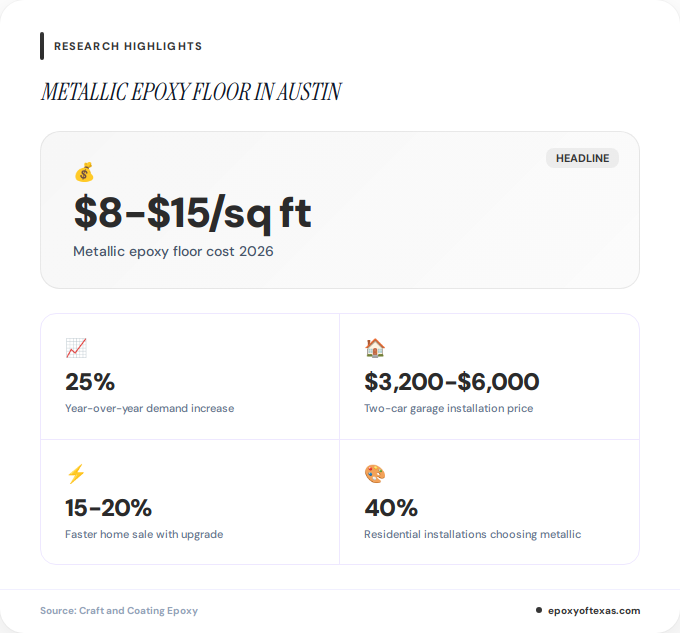
A metallic epoxy floor in Austin costs $8 to $15 per square foot in 2026, with typical two-car garage installations ranging from $3,200 to $6,000 depending on preparation, design complexity, and square footage. Austin’s hot climate and booming real estate market have driven a 25% year-over-year increase in metallic epoxy demand, with 40% of residential installations now choosing this premium finish for its durability, aesthetic appeal, and property value enhancement.
Did you know that homes with metallic epoxy garage floors in Austin sell 15 to 20% faster than comparable properties without this upgrade? As Austin’s real estate market continues its tech-fueled boom, homeowners are discovering that a metallic epoxy floor in Austin offers far more than just visual appeal.
This three-dimensional, liquid-metal finish combines artistry with industrial-grade durability, transforming ordinary garage floors, basements, and commercial spaces into stunning focal points. With 2026 projections showing 40% of residential installations choosing metallic finishes, Austin residents are embracing this premium flooring solution at unprecedented rates.
Whether you’re upgrading a home in West Lake Hills, renovating a downtown loft, or outfitting a commercial space in Round Rock, understanding the costs, benefits, and installation process is essential. This comprehensive guide draws on the latest industry data, local market trends, and expert insights to help you make an informed decision.
What Is a Metallic Epoxy Floor and Why Is It Popular in Austin?
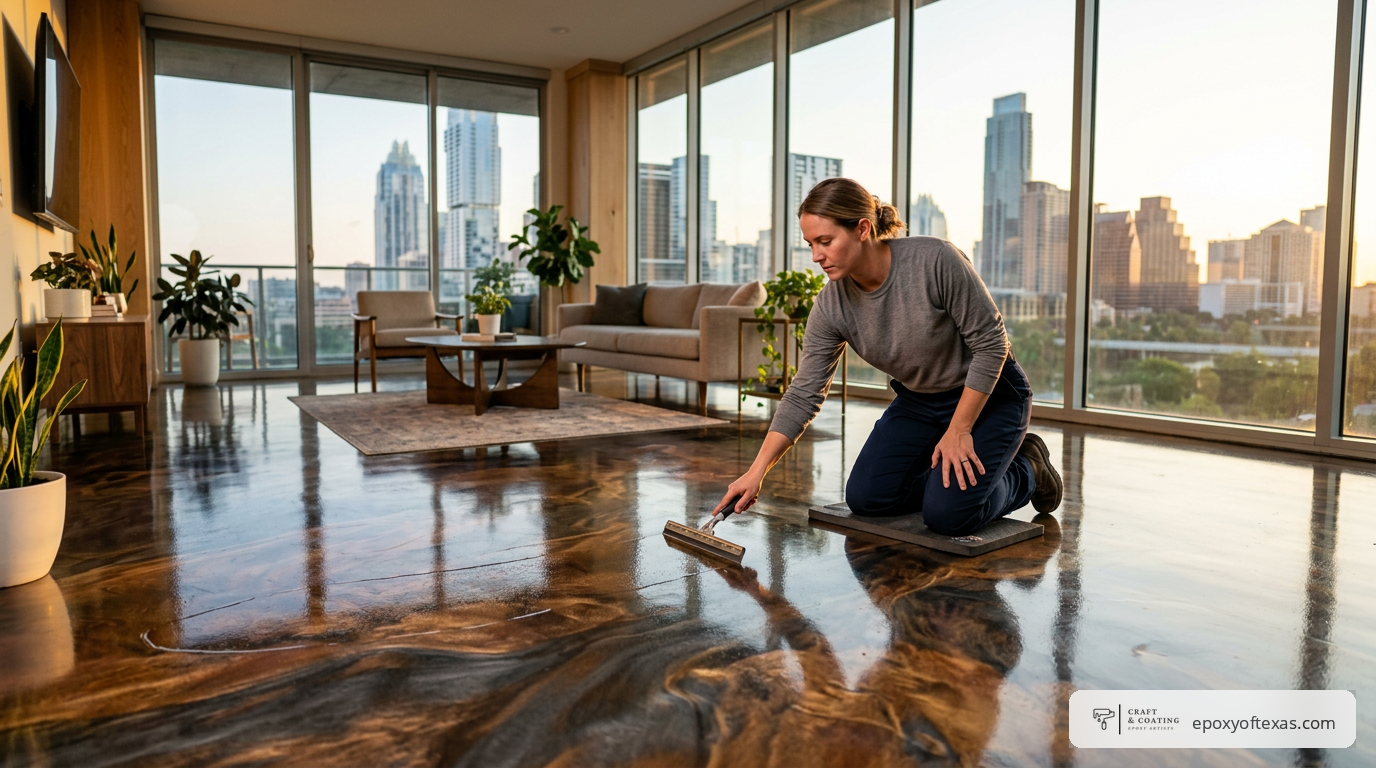
A metallic epoxy floor is created by blending specialized metallic pigments into high-performance epoxy resin, then manipulating the mixture during application to create swirling, marbled patterns that resemble liquid metal, molten lava, or ocean waves. Unlike traditional solid-color epoxy systems, metallic floors deliver a unique, one-of-a-kind finish that cannot be exactly replicated.
The system consists of a base coat, metallic epoxy layer, and protective topcoat that work together to create depth and dimension. Professional installers use specialized tools and techniques to manipulate the metallic pigments while the epoxy is still wet, creating movement and visual interest.
Austin’s popularity surge stems from several factors. The city’s hot, humid climate demands flooring that can withstand temperature fluctuations from 100°F summer highs to occasional winter freezes. The influx of tech professionals and young homeowners has created demand for modern, Instagram-worthy finishes that blend industrial aesthetics with luxury appeal.
Local contractors report that 60% of their 2025 installations featured metallic finishes, a dramatic shift from five years ago when this option represented less than 15% of projects. Austin area epoxy specialists attribute this growth to increased awareness through social media showcases and home improvement shows.
How Much Does Metallic Epoxy Flooring Cost in Austin?
Metallic epoxy flooring in Austin represents a premium investment, with pricing varying based on project scope, surface preparation requirements, design complexity, and finish quality. Understanding these cost factors helps homeowners budget appropriately for this transformative upgrade.
For 2026, metallic epoxy floor costs in Austin range from $8 to $15 per square foot, significantly higher than basic solid-color systems. This pricing reflects the specialized materials, skilled labor, and artistic techniques required to achieve the signature metallic finish.
| Epoxy Type | Cost Per Sq. Ft. | 400 Sq. Ft. Garage Total |
|---|---|---|
| Solid Color Epoxy | $3 to $6 | $1,200 to $2,400 |
| Flake Epoxy | $5 to $8 | $2,000 to $3,200 |
| Metallic Epoxy | $8 to $15 | $3,200 to $6,000 |
| Hybrid Systems | $7 to $12 | $3,500 to $4,800 |
Austin-specific factors add 10 to 15% premiums compared to national averages. Labor rates in the Austin metro area run $75 to $125 per hour, reflecting the city’s robust economy and skilled contractor demand. Material shipping costs and project complexity further influence final pricing.
Several variables affect where your project falls within the pricing spectrum. Surface preparation requirements can add $2 to $5 per square foot if concrete grinding, crack repair, or moisture mitigation is needed. Complex multi-color designs, custom patterns, or additional decorative elements increase both material and labor costs.
Pricing varies significantly based on your specific project’s scope, surface condition, and design preferences. Premium metallic epoxy represents an investment in both immediate visual impact and long-term durability. Contact professional installers for a custom quote that accounts for your unique requirements and ensures proper material selection and installation techniques.
The average residential metallic epoxy project in Austin now totals $5,100 in 2026, up from $4,200 in 2025. Industry forecasts project this will rise to $5,800 by 2027 as material costs and demand continue climbing.
What Are the Benefits of Metallic Epoxy Floors?
Metallic epoxy floors deliver advantages that extend far beyond their striking appearance. These comprehensive benefits explain why Austin homeowners and businesses are choosing this premium flooring solution at accelerating rates.
Exceptional Durability: Metallic epoxy systems withstand the harsh demands of garage environments, including hot tire pickup, chemical spills, and heavy foot traffic. The high-performance resin creates a surface significantly harder than concrete alone, with proper installations lasting 15 to 20 years or more with minimal maintenance.
Low Maintenance Requirements: The seamless, non-porous surface resists dust, stains, and moisture penetration. Regular sweeping and occasional mopping with mild cleaners keeps the floor looking pristine. This ease of maintenance particularly appeals to busy Austin professionals seeking beautiful spaces without intensive upkeep demands.
Property Value Enhancement: Real estate data shows homes with garage floor epoxy in Austin command median sale price increases of $8,000 to $12,000. The visual impact creates strong first impressions during showings, while the durability reassures buyers about long-term quality.
Chemical and Moisture Resistance: The epoxy barrier protects underlying concrete from automotive fluids, cleaning products, and Austin’s occasional heavy rains. This protection prevents deterioration and extends the life of your concrete foundation.
Customization Options: Each metallic floor is unique, with virtually unlimited color combinations and pattern possibilities. This customization allows homeowners to match existing design themes or create bold statement pieces that reflect personal style.
Reflective Properties: The high-gloss metallic finish reflects light throughout the space, brightening garages and basements that typically suffer from poor natural lighting. This reflectivity can reduce artificial lighting needs and creates a more inviting environment.
How Is Metallic Epoxy Flooring Installed?
Professional installation follows a precise multi-step process that requires specialized skills, proper equipment, and attention to environmental conditions. Understanding this process helps homeowners appreciate the craftsmanship involved and set realistic timeline expectations.
Surface Preparation (Day 1): The concrete surface undergoes diamond grinding or shot blasting to create the proper profile for epoxy adhesion. This critical step removes existing coatings, contaminants, and surface laitance. Cracks receive repair treatment, and the entire floor is thoroughly vacuumed to remove dust particles.
Moisture testing determines if vapor barriers are needed. Austin’s clay soil can create hydrostatic pressure issues, making this evaluation essential. Professional contractors use calcium chloride tests to measure moisture vapor emission rates before proceeding.
Primer Application (Day 1-2): A primer coat seals the concrete and enhances epoxy adhesion. This layer must cure according to manufacturer specifications, typically 4 to 8 hours, before metallic epoxy application begins.
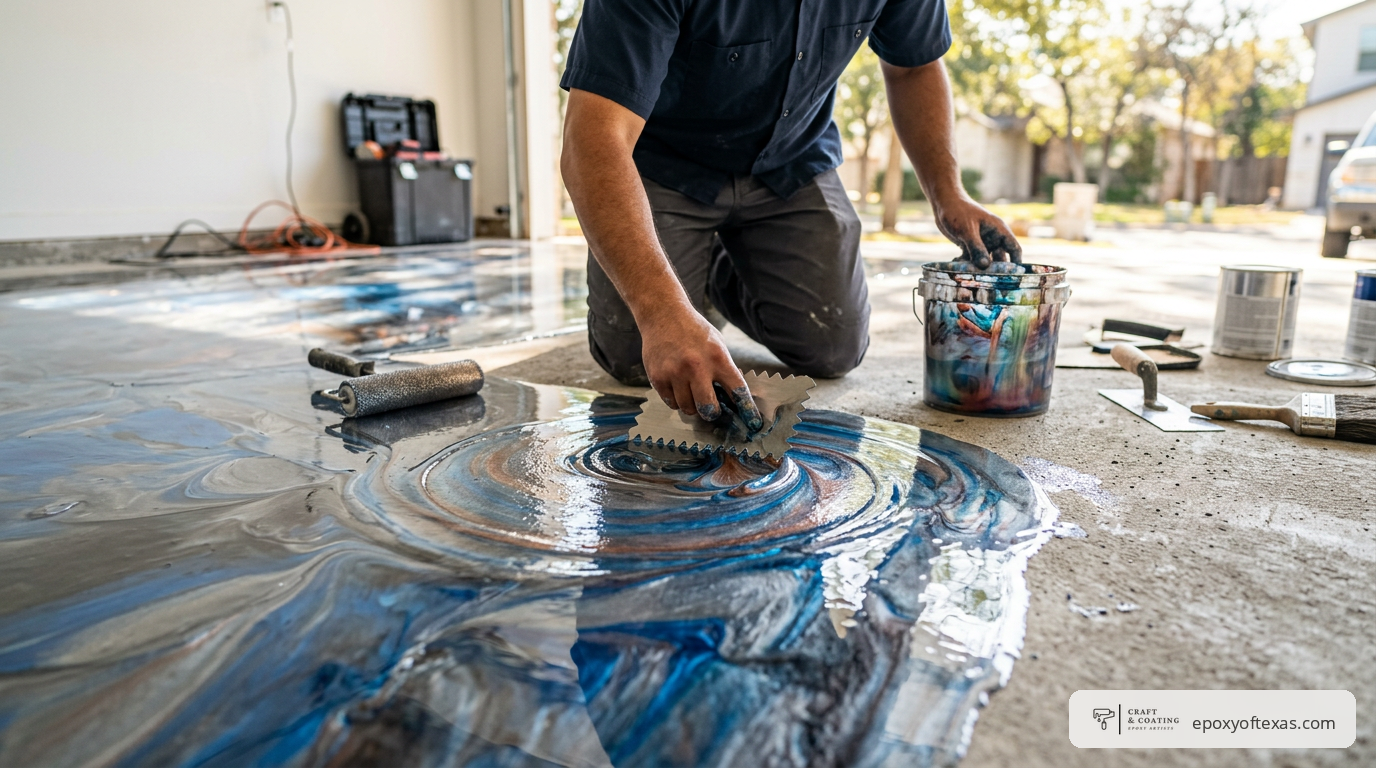
Metallic Epoxy Application (Day 2): The artistic phase begins as installers mix metallic pigments into epoxy resin base coats. Using specialized tools like foam rollers, squeegees, and proprietary manipulation tools, they create swirling patterns and color variations. This step requires extensive experience and artistic sensibility to achieve desired effects.
Temperature and humidity control during this phase critically impacts results. Professional installers monitor conditions carefully, as Austin’s summer heat can accelerate cure times and affect working windows.
Clear Topcoat Application (Day 3): Multiple layers of clear polyurethane or polyaspartic topcoat seal and protect the metallic layer. These coatings provide UV resistance, prevent yellowing, and deliver the characteristic high-gloss finish. Each layer requires proper cure time before the next application.
Curing Period: Complete curing takes 3 to 7 days depending on products used and environmental conditions. Light foot traffic typically resumes after 24 to 48 hours, while vehicle traffic requires 5 to 7 days. Full chemical resistance develops over 30 days.
The entire process from start to full cure typically spans 5 to 10 days for residential projects. Rushing any phase compromises durability and appearance, making patience essential for optimal results.
What Design Options Are Available for Metallic Epoxy?
The artistic possibilities with metallic epoxy are virtually limitless, allowing homeowners to create floors that range from subtle elegance to bold showpieces. Understanding available options helps in communicating vision to installers and making informed design choices.
Color Selections: Metallic pigments come in dozens of colors including silver, gold, copper, bronze, pearl white, obsidian black, and vibrant blues, greens, and reds. Multiple colors can be blended in single installations to create depth and complexity.
Popular Austin trends for 2026 lean toward ocean-inspired blues and teals that evoke nearby Lake Travis, warm earth tones reflecting Hill Country landscapes, and bold metallics that complement modern industrial design aesthetics. Industry trend forecasters predict increased demand for multi-tonal neutral palettes.
Pattern Styles: Manipulation techniques create distinct visual effects. Swirled patterns mimic flowing water or wind-swept sand. Cellular patterns resemble marble or granite. Wave patterns create rhythmic movement across the floor. Each style requires different application methods and skill levels.
Finish Options: High-gloss finishes maximize light reflection and create dramatic depth. Satin finishes offer subtle sheen with less glare. Matte topcoats provide contemporary aesthetics with improved slip resistance, though they somewhat diminish the metallic effect’s full visual impact.
Hybrid Designs: Combining metallic epoxy with decorative flakes creates textured visual interest. Border designs using contrasting colors frame the main floor area. Geometric patterns and logos can be integrated for personalized touches, particularly popular in commercial applications.
Texture Additions: While metallic epoxy typically creates smooth surfaces, additives can introduce slip resistance for safety in wet areas. This consideration matters for Austin homeowners using garage spaces for multiple purposes beyond vehicle storage.
How Does Austin’s Climate Affect Metallic Epoxy Performance?
Austin’s distinctive climate presents both challenges and opportunities for epoxy flooring installations. Understanding these regional factors ensures proper product selection and installation timing for optimal long-term performance.
Temperature Extremes: Austin experiences summer temperatures regularly exceeding 100°F and occasional winter freezes. Quality metallic epoxy systems handle this range without cracking, delaminating, or losing adhesion when properly installed with appropriate temperature-rated products.
Heat particularly impacts installation timing. Summer garage temperatures can reach 120°F or higher, accelerating epoxy cure rates and shortening working time windows. Professional installers often schedule work during cooler morning hours or milder months to ensure proper application.
Humidity Considerations: Austin’s average relative humidity of 65% affects both installation and long-term performance. High humidity during installation can cause surface defects or adhesion issues if moisture vapor barriers aren’t properly addressed. Once cured, quality epoxy systems resist moisture intrusion that could damage underlying concrete.
UV Exposure: Garages with windows or those opened during the day experience UV radiation that can yellow or fade inferior epoxy products. Premium metallic systems incorporate UV-resistant topcoats that maintain clarity and color integrity even with significant sun exposure.
Thermal Cycling: Repeated expansion and contraction from temperature changes tests epoxy flexibility. High-quality formulations maintain elasticity to accommodate concrete movement without cracking. This durability explains why properly installed metallic epoxy floors in Austin last 15 to 20 years or more.
Seasonal Installation Windows: Spring (March through May) and fall (September through November) offer ideal conditions with moderate temperatures and lower humidity. Summer installations require climate-controlled environments or strategic timing, while winter work must account for concrete temperature requirements typically above 50°F.
What Are the 2026 Market Trends for Metallic Epoxy in Austin?
The metallic epoxy market in Austin is experiencing remarkable growth driven by demographic shifts, aesthetic preferences, and real estate dynamics. Current data and forward-looking projections reveal a market poised for continued expansion.
Residential Adoption Surge: Residential metallic epoxy installations in the Austin metro area reached 1,500 projects in 2026, representing a 25% increase from 2025’s 1,200 installations. Projections indicate this will climb to 1,800 by 2027, a 20% additional increase reflecting sustained demand.
The percentage of residential installations choosing metallic finishes jumped from 25% in 2025 to 40% in 2026. This dramatic shift demonstrates how metallic has transitioned from premium specialty option to mainstream preference among Austin homeowners.
Metallic Share: 25%
Avg Project Value: $4,200
Commercial Metallic: 30%
Metallic Share: 40%
Avg Project Value: $5,100
Commercial Metallic: 60%
Metallic Share: 50%
Avg Project Value: $5,800
Commercial Metallic: 70%
Commercial Expansion: Commercial applications are driving even more dramatic growth. The hybrid and metallic share of commercial projects jumped from 30% in 2025 to 60% in 2026, with projections reaching 70% by 2027. Large-scale installations like the 42,000 square foot University of Texas project demonstrate metallic epoxy’s scalability.
Search Interest Patterns: Google Trends data reveals seasonal patterns with peak searches in August correlating with summer home improvement projects and garage upgrades. The related search for “epoxy garage floor” dominated at 100 in March 2025, indicating strong connection between garage renovations and metallic epoxy interest.
Real Estate Integration: Epoxy flooring specialists report collaboration with home stagers and real estate agents who recognize metallic floors’ sales impact. Properties in neighborhoods like Tarrytown, Hyde Park, and Mueller featuring upgraded garage floors consistently outperform comparable listings.
Technology Integration: Forward-thinking contractors now offer 3D visualization tools allowing clients to preview metallic designs before installation. This technology reduces uncertainty and increases client confidence in making premium finish selections.
Sustainability Focus: Growing environmental awareness is driving demand for low-VOC and solvent-free metallic epoxy formulations. Austin’s environmentally conscious population particularly values products meeting Green Building standards and contributing to LEED certification goals.
Key Takeaways
- Metallic epoxy floors in Austin cost $8 to $15 per square foot in 2026, with typical two-car garage installations ranging from $3,200 to $6,000 depending on project complexity and surface preparation requirements.
- Residential adoption has surged to 40% of installations choosing metallic finishes, up from 25% in 2025, driven by aesthetic appeal, durability benefits, and property value enhancement of $8,000 to $12,000.
- Austin’s climate demands quality products and proper installation timing, with spring and fall offering ideal conditions and professional installers accounting for temperature extremes, humidity, and UV exposure.
- Professional installation requires 5 to 10 days from surface preparation through complete curing, with each phase critical to achieving optimal appearance and long-term durability of 15 to 20 years.
- Design options are virtually unlimited, with color selections, pattern styles, and finish options allowing complete customization to match personal aesthetics or architectural themes.
- Market projections show continued growth with residential installations reaching 1,800 by 2027 and commercial metallic share climbing to 70%, reflecting mainstream acceptance of this premium flooring solution.
- Homes with metallic epoxy floors sell 15 to 20% faster in Austin’s competitive real estate market, making this upgrade both an immediate aesthetic improvement and strategic investment in property value.
People Also Ask
How long does metallic epoxy flooring last in Austin?
Properly installed metallic epoxy floors in Austin last 15 to 20 years or more with minimal maintenance. The longevity depends on installation quality, product selection, and usage patterns, with residential applications typically outlasting high-traffic commercial environments.
Can metallic epoxy be applied to existing garage floors?
Yes, metallic epoxy can be applied to existing concrete garage floors after proper surface preparation including cleaning, grinding, crack repair, and moisture testing. Previous coatings must be completely removed to ensure proper adhesion and long-term performance.
Is metallic epoxy flooring slippery when wet?
High-gloss metallic epoxy can be slippery when wet, but anti-slip additives can be incorporated into the topcoat to improve traction without significantly compromising the metallic appearance. Professional installers can recommend appropriate slip-resistance levels based on intended use.
What maintenance does metallic epoxy flooring require?
Metallic epoxy requires minimal maintenance including regular sweeping or dust mopping and occasional cleaning with pH-neutral cleaners. Avoid harsh chemicals, abrasive cleaners, and high-pressure washers that could damage the topcoat and diminish the finish’s appearance over time.
Can metallic epoxy floors be repaired if damaged?
Minor damage like scratches can often be buffed out or spot-repaired with additional topcoat. Significant damage may require partial or complete refinishing, though achieving exact color and pattern matches on metallic floors can be challenging due to their unique application process.
How does metallic epoxy compare to other garage floor coatings?
Metallic epoxy offers superior aesthetics and comparable durability to flake epoxy systems but at higher cost. It provides better chemical resistance than paint-based coatings and more design flexibility than solid-color epoxy, making it the premium choice for homeowners prioritizing appearance alongside performance.
Frequently Asked Questions
How much does a metallic epoxy floor cost for a two-car garage in Austin?+
A typical two-car garage (400 square feet) with metallic epoxy flooring costs between $3,200 and $6,000 in Austin for 2026, depending on surface condition, design complexity, and product selection. Pricing varies based on your specific project requirements including preparation needs, color choices, and finish preferences.
What is the best time of year to install metallic epoxy in Austin?+
Spring (March through May) and fall (September through November) offer ideal installation conditions in Austin with moderate temperatures and lower humidity. These seasons provide optimal curing conditions and longer working windows for installers to create the best metallic effects.
Will metallic epoxy withstand Austin’s hot summer temperatures?+
Yes, quality metallic epoxy systems are designed to handle Austin’s extreme summer temperatures exceeding 100°F without softening, delaminating, or losing adhesion. Professional-grade products incorporate heat-resistant formulations specifically engineered for hot climates like Central Texas.
Can I park my car on metallic epoxy immediately after installation?+
No, metallic epoxy requires 5 to 7 days of curing before vehicle traffic. Light foot traffic is typically permitted after 24 to 48 hours, but full chemical resistance and maximum hardness develop over 30 days.
Do metallic epoxy floors increase home value in Austin?+
Yes, homes with metallic epoxy garage floors in Austin typically see median sale price increases of $8,000 to $12,000 and sell 15 to 20% faster than comparable properties. The visual impact creates strong buyer impressions while demonstrating quality home maintenance.
What preparation is required before metallic epoxy installation?+
Proper preparation includes diamond grinding or shot blasting the concrete surface, repairing cracks and damage, moisture testing, and thorough cleaning to remove all contaminants. This preparation phase is critical for adhesion and long-term durability of the metallic finish.
How do I choose colors for my metallic epoxy floor?+
Professional installers provide color samples and portfolio examples to help visualize options. Consider your garage’s intended use, existing home aesthetics, and personal preferences. Many Austin homeowners choose colors that complement Hill Country landscapes or modern industrial design themes popular in the area.