How Long Does Epoxy Flooring Last in Austin: Complete Durability and Lifespan Guide
Quick Answer
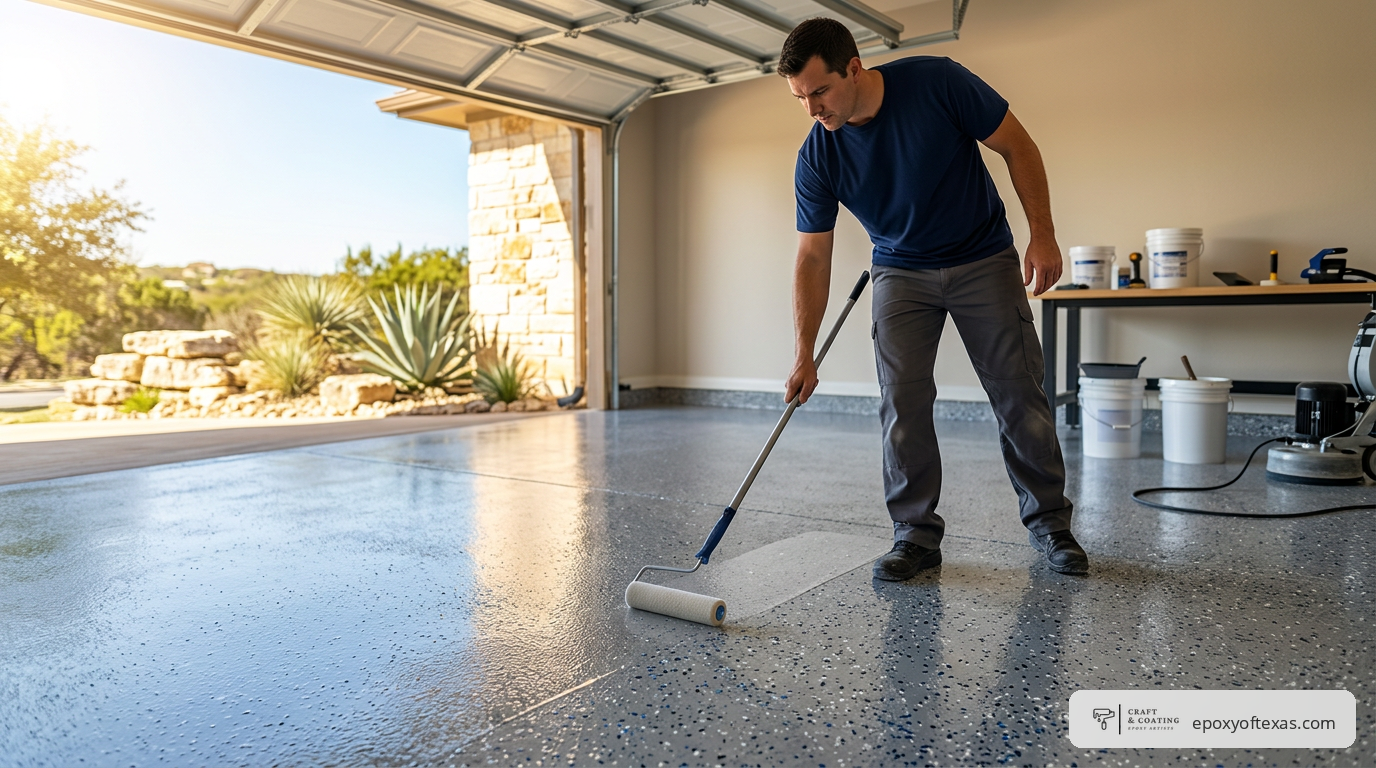
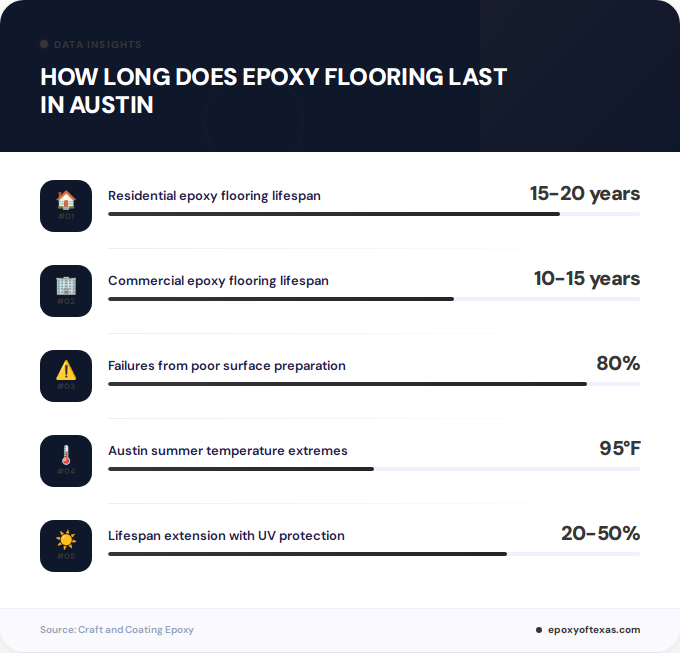
Professionally installed epoxy flooring in Austin typically lasts 15-20 years in residential settings and 10-15 years in high-traffic commercial environments, influenced by the local humid subtropical climate with hot summers, mild winters, and occasional heavy rains. Proper surface preparation, high-quality materials, and professional installation are essential to achieve maximum lifespan in Austin’s unique climate conditions.
Did you know that 80% of epoxy flooring failures within the first 5 years are directly attributed to poor surface preparation, not the coating itself? When homeowners and business owners in Austin invest thousands of dollars in epoxy flooring, understanding how long does epoxy flooring last in Austin becomes critical to protecting that investment. With Austin’s unique climate conditions, including temperatures exceeding 95°F in summer and humidity levels that can challenge even the best coatings, knowing what to expect from your epoxy floor is essential.
The lifespan of epoxy flooring varies dramatically based on application type, installation quality, and environmental factors. Whether you’re considering epoxy for your garage in Round Rock, a commercial warehouse in Cedar Park, or an outdoor patio in Lakeway, this comprehensive guide provides the data-driven insights you need to make informed decisions about your flooring investment.
How Does Austin’s Climate Affect Epoxy Flooring Longevity?
Austin’s humid subtropical climate presents unique challenges for epoxy flooring systems that directly impact their lifespan. The city experiences hot summers with temperatures frequently exceeding 95°F (35°C), high humidity levels averaging 60-70%, and occasional heavy rains that can affect both indoor and outdoor installations.
According to expert analysis on Austin climate effects, high humidity poses the greatest risk when substrate moisture exceeds 4% relative humidity, potentially causing blistering and delamination. Professional installers in Georgetown, Bee Cave, and surrounding areas must conduct thorough moisture testing before application to prevent premature failure.
UV exposure also accelerates epoxy degradation, particularly for outdoor applications like driveways and patios. While epoxy flooring in Lakeway, TX and other lakeside communities faces additional moisture challenges, professional installations with UV-stable polyaspartic topcoats can mitigate sun damage and extend lifespan by 20-50% compared to standard epoxy systems.
The local soil composition in Austin, known for its expansive clay, can also contribute to concrete substrate movement. This movement, combined with temperature fluctuations between day and night, creates stress on epoxy coatings. Professional contractors address this through proper garage floor preparation techniques including crack repair and flexible primer systems.
What Is the Difference Between Residential and Commercial Epoxy Lifespan?
The expected lifespan of epoxy flooring varies significantly between residential and commercial applications, primarily due to traffic volume, chemical exposure, and mechanical stress. Understanding these differences helps property owners set realistic expectations for their investment.
| Application Type | Expected Lifespan | Primary Factors |
|---|---|---|
| Residential Garage | 15-20 years | Light vehicle traffic, controlled environment |
| Commercial Showroom | 10-15 years | Moderate foot traffic, occasional heavy loads |
| Industrial Warehouse | 3-10 years | Heavy machinery, chemical exposure, forklift traffic |
Residential epoxy installations in Austin neighborhoods benefit from controlled indoor environments and limited traffic exposure. Industry data confirms that garage floors with proper climate control and minimal chemical exposure routinely achieve the upper end of the 15-20 year range.
Commercial applications, including commercial epoxy flooring in Austin, TX, experience accelerated wear due to constant foot traffic, cleaning chemicals, and temperature variations from HVAC systems. Retail spaces, medical facilities, and office environments typically see 10-15 years of service before requiring recoating or replacement.
For industrial epoxy flooring in Austin, TX, heavy machinery operation, chemical spills, and extreme mechanical stress reduce lifespan to 3-10 years. However, specialized industrial-grade systems with enhanced thickness (20+ mils) and chemical-resistant formulations can approach the higher end of this range.
What Factors Determine How Long Epoxy Flooring Lasts?
Multiple interconnected factors influence epoxy flooring longevity, from material quality to environmental conditions. Understanding these variables helps property owners make informed decisions about specification and maintenance.
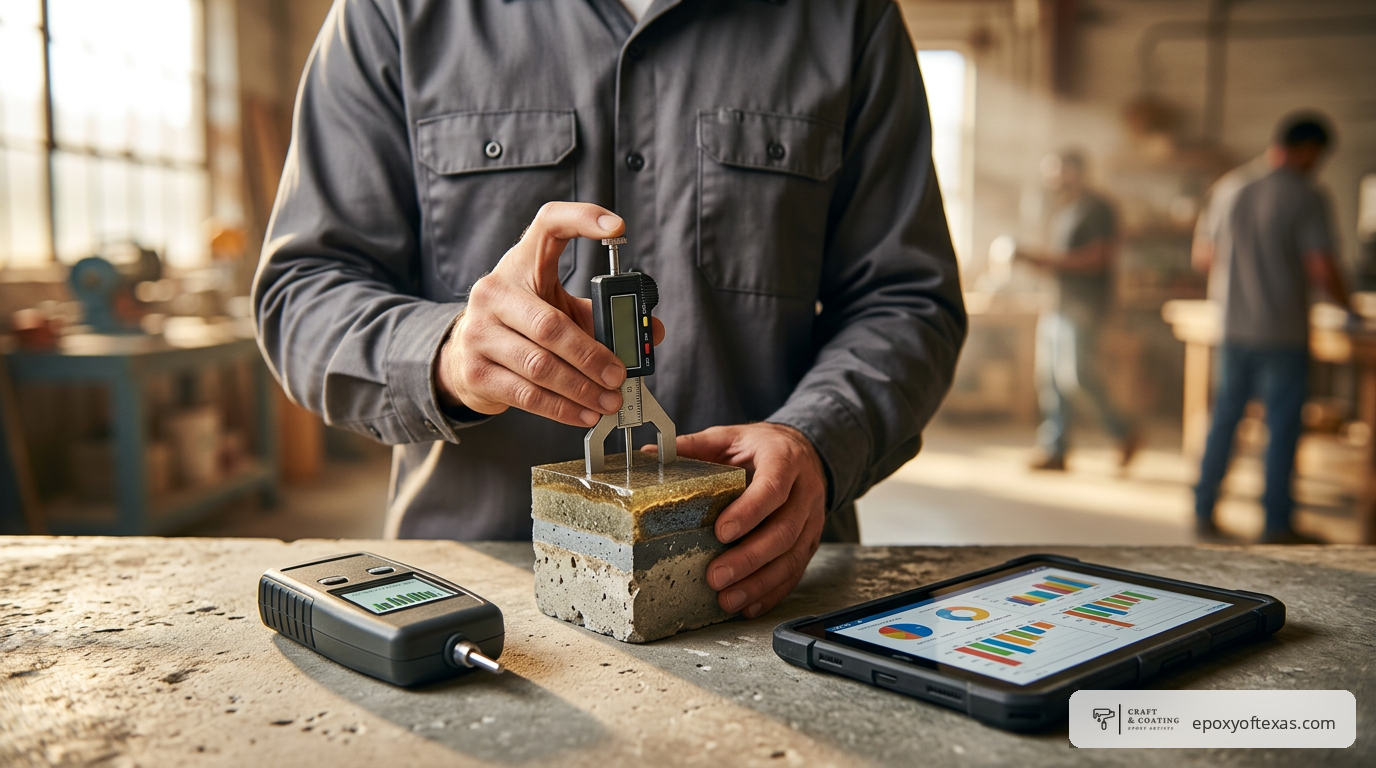
Surface preparation quality ranks as the single most critical factor affecting lifespan. Diamond grinding to achieve Concrete Surface Profile (CSP) 2-3 creates the mechanical bond necessary for long-term adhesion. Without proper profiling, even premium epoxy systems fail prematurely, typically within 2-5 years.
Material quality and solids content directly correlate with durability. High-solids epoxy formulations (70%+ solids content) provide thicker, more durable films compared to water-based or low-solids alternatives. The comprehensive lifespan analysis indicates that 100% solids epoxy systems consistently outperform lower-solids alternatives by 30-50% in longevity tests.
Key factors affecting epoxy lifespan include:
- Film thickness: 10-20 mil minimum for residential, 20+ mils for commercial/industrial
- Substrate moisture content: Must be below 4% relative humidity to prevent osmotic blistering
- UV exposure: Direct sunlight degrades standard epoxy; UV-stable topcoats essential for outdoor applications
- Chemical exposure: Oils, solvents, and acidic cleaners accelerate degradation without proper sealing
- Temperature cycling: Extreme fluctuations create expansion/contraction stress on the coating system
- Traffic patterns: Concentrated wear areas require more frequent maintenance or enhanced protection
Proper garage floor preparation for epoxy in Texas addresses all these variables through systematic evaluation and mitigation strategies, ensuring maximum return on investment.
Why Does Professional Installation Matter for Epoxy Longevity?
The installation process has more impact on epoxy flooring lifespan than any other single factor. While DIY epoxy kits promise easy application and cost savings, professional installation delivers 3-4 times longer service life on average compared to amateur applications.
Professional installers bring specialized equipment and expertise that directly affect longevity. Commercial-grade diamond grinders achieve proper surface profile consistently, while moisture meters and environmental monitoring ensure ideal application conditions. These tools are typically unavailable to DIY installers, leading to compromised adhesion and premature failure.
According to flooring industry professionals, proper environmental control during application proves critical. Temperature and humidity must fall within specific ranges (typically 50-90°F and below 85% relative humidity) for proper curing. Professional contractors monitor these conditions continuously and adjust application schedules accordingly.
The detailed epoxy flooring installation process includes multiple quality control checkpoints that DIY applications typically skip:
- Comprehensive substrate evaluation including moisture testing, pH testing, and contamination assessment
- Mechanical surface preparation using diamond grinding or shot blasting rather than inadequate acid etching
- Crack and joint repair with flexible epoxy fillers to prevent stress transfer
- Primer application matched to substrate porosity and moisture conditions
- Base coat application with proper thickness and uniform coverage
- Decorative elements integration (flakes, metallics) with optimal timing
- Topcoat application using UV-stable polyurethane or polyaspartic for maximum protection
- Proper cure time before allowing traffic (24-72 hours minimum, up to 7 days for full cure)
Professional installers also understand local conditions. For example, epoxy flooring in Hutto, TX requires different moisture mitigation strategies than installations in downtown Austin due to soil composition variations and water table differences.
How Can You Extend Your Epoxy Floor’s Lifespan in Austin?
Proper maintenance significantly extends epoxy flooring life beyond baseline expectations. With appropriate care, residential installations can reach 25+ years, while commercial floors can exceed 15 years despite heavy use.
Regular cleaning practices form the foundation of epoxy maintenance. Sweep or dust mop daily to remove abrasive dirt and debris that act like sandpaper under foot traffic. Weekly damp mopping with pH-neutral cleaners prevents chemical buildup that can etch or discolor the surface over time.
Austin’s climate demands particular attention to moisture management. During humid summer months, ensure adequate ventilation to prevent moisture accumulation on the surface. For garage installations, maintain door seals to prevent water intrusion during heavy rains, which are increasingly common in Central Texas.
Preventive maintenance strategies include:
- Place protective mats under hot tire pickup points in garages to prevent thermal shock
- Use furniture pads under heavy equipment or storage units to distribute weight
- Clean spills immediately, especially automotive fluids, which can penetrate even sealed epoxy over time
- Avoid harsh chemicals like citrus-based degreasers or ammonia-based cleaners that attack epoxy bonds
- Reapply topcoat every 3-5 years in high-traffic areas to maintain protective barrier
- Address minor damage promptly before small chips become larger delamination areas
For metallic epoxy flooring in Austin, TX, UV protection becomes even more critical due to the specialized pigments. Window film or UV-blocking topcoats preserve the distinctive aesthetic while preventing color fading and degradation.
Professional recoating services, typically needed every 10-15 years for residential applications, involve light surface abrasion and application of fresh topcoat layers. This process costs significantly less than complete replacement while restoring original appearance and protection.
Which Epoxy Coating Types Last Longest in Austin?
Not all epoxy systems offer equal longevity, with significant performance variations between coating types, formulations, and application methods. Understanding these differences helps property owners select the optimal system for their specific needs.
100% solids epoxy systems consistently outperform water-based or solvent-based alternatives in longevity testing. These systems contain no volatile carriers, resulting in thicker, more durable films with superior chemical and mechanical resistance. While more expensive initially, they deliver 40-60% longer service life, making them the most cost-effective choice over the floor’s lifetime.
Solids Content: 30-50%
Best For: Light residential use
UV Resistance: Poor
Chemical Resistance: Moderate
Solids Content: 50-70%
Best For: Moderate commercial use
UV Resistance: Fair
Chemical Resistance: Good
Solids Content: 100%
Best For: All applications
UV Resistance: Requires topcoat
Chemical Resistance: Excellent
Solids Content: 100%
Best For: Premium installations
UV Resistance: Excellent
Chemical Resistance: Superior
Polyaspartic topcoats represent the latest advancement in epoxy protection technology. These UV-stable coatings cure rapidly (within hours rather than days) while providing superior abrasion resistance and color stability. Industry trends increasingly favor polyaspartic systems for Austin installations, where intense summer sun would otherwise degrade standard epoxy within 5-8 years.
The comprehensive metallic epoxy floor cost and benefits analysis demonstrates how premium coating systems deliver better long-term value despite higher initial investment. A $10,000 to $25,000+ metallic epoxy installation lasting 20-25 years costs less annually than a $5,000 to $12,000+ basic system requiring replacement every 8-10 years.
Specialized formulations for specific applications include:
- Anti-static epoxy: Essential for electronics manufacturing or medical facilities, maintains conductivity for 12-18 years
- Chemical-resistant epoxy: Enhanced crosslinking for laboratories or auto shops, withstands aggressive solvents for 10-15 years
- High-build epoxy: Thicker films (30-60 mils) for severe environments, extends commercial lifespan to 12-18 years
- Self-leveling epoxy: Smooth, seamless finish for showrooms, maintains appearance for 12-16 years with proper maintenance
Selecting appropriate coating types requires understanding specific environmental challenges and use patterns. Professional contractors at Epoxy of Texas conduct thorough site evaluations to recommend optimal systems for each unique application.
How Much Should You Invest for Long-Lasting Epoxy in Austin?
Understanding the relationship between initial investment and long-term durability helps property owners make informed financial decisions about epoxy flooring. While pricing varies based on scope, materials, location, and quality, certain investment thresholds correlate strongly with longevity outcomes.
Professional epoxy installation in Austin typically ranges from $8,000 to $30,000+ for residential garages and $15,000 to $100,000+ for commercial spaces, depending on square footage, system complexity, and finish requirements. These ranges reflect significant quality variations that directly impact lifespan.
The detailed epoxy floor cost analysis reveals that lower-cost installations ($3-5 per square foot) typically use thin water-based coatings with minimal surface preparation. These systems rarely exceed 5-7 years before requiring replacement, resulting in higher lifetime costs despite lower initial investment.
Mid-range installations ($6-10 per square foot) employ solvent-based epoxy with adequate surface preparation and decorative flakes or quartz. These systems deliver 10-15 year lifespans in residential applications, representing good value for budget-conscious property owners.
Premium installations ($10-20+ per square foot) utilize 100% solids epoxy with polyaspartic topcoats, comprehensive surface preparation, and custom decorative elements. These systems achieve 15-25+ year lifespans, offering the lowest annual cost despite higher upfront investment.
Cost considerations specific to Austin include:
- Climate mitigation: UV-stable topcoats add $1-3 per square foot but extend outdoor lifespan by 50-100%
- Moisture barriers: Essential in high-humidity areas, add $0.50-1.50 per square foot to prevent osmotic failure
- Surface preparation upgrades: Diamond grinding vs. acid etching adds $1-2 per square foot but triples adhesion lifespan
- Premium finishes: Metallic or custom designs add $3-8 per square foot while maintaining equal structural durability
For comprehensive residential epoxy flooring and commercial applications, pricing varies based on your specific project requirements, existing substrate conditions, and desired performance characteristics. Contact professionals for custom quotes that account for all longevity-affecting variables.
The investment in quality epoxy flooring should be viewed through a lifecycle cost lens rather than initial price alone. When amortized over 15-20 years, premium systems often cost 30-50% less annually than budget alternatives while delivering superior aesthetics and performance throughout their service life.
Key Takeaways
- Professional epoxy flooring in Austin lasts 15-20 years in residential settings and 10-15 years in commercial applications when properly installed with quality materials and appropriate climate mitigation strategies.
- Surface preparation quality determines 80% of longevity outcomes, with diamond grinding to CSP 2-3 and moisture testing below 4% RH being non-negotiable for maximum lifespan.
- Austin’s humid subtropical climate requires UV-stable topcoats and moisture barriers to achieve expected lifespans, particularly for installations in high-sun exposure areas like Lakeway, Cedar Park, and Georgetown.
- 100% solids epoxy with polyaspartic topcoats delivers 40-60% longer service life than water-based or solvent-based alternatives, making them the most cost-effective choice over the floor’s lifetime despite higher initial investment.
- Professional installation costs $8,000 to $30,000+ for residential garages and $15,000 to $100,000+ for commercial spaces, with pricing varying based on scope, materials, location, and quality requirements.
- Regular maintenance including daily sweeping, pH-neutral cleaning, and topcoat renewal every 3-5 years can extend epoxy lifespan to 25+ years in residential applications.
- DIY installations typically last only 3-7 years compared to 15-20 years for professional work, making professional installation a critical investment in long-term performance and value.
People Also Ask
Can epoxy flooring withstand Austin’s extreme summer heat?
Yes, properly installed epoxy flooring can withstand Austin’s extreme summer temperatures exceeding 95°F. High-quality 100% solids epoxy systems with polyaspartic topcoats are specifically formulated to resist thermal cycling and UV degradation, maintaining structural integrity and appearance throughout Texas summers for 15-20 years when professionally applied.
How does garage epoxy perform compared to outdoor driveway epoxy in Austin?
Garage epoxy significantly outperforms outdoor driveway applications, lasting 15-20 years indoors versus 5-12 years outdoors in Austin. The controlled environment protects against UV degradation, temperature extremes, and direct moisture exposure that accelerate outdoor coating failure, though UV-stable topcoats can extend outdoor driveway lifespan to approach indoor performance.
When should you recoat epoxy flooring in Austin?
Residential epoxy should be recoated every 10-15 years, while high-traffic commercial floors need recoating every 5-8 years. Signs indicating recoating needs include visible wear patterns, loss of gloss, minor surface scratches, or color fading, though properly maintained epoxy can often extend beyond these timeframes before requiring professional topcoat renewal.
Does epoxy flooring last longer than other garage floor coatings in Texas?
Professional epoxy flooring significantly outlasts alternative coatings in Texas, with 15-20 year lifespans compared to 1-3 years for basic concrete paint, 3-5 years for acrylic sealers, and 5-10 years for polyurea. Only high-end polyaspartic systems rival or exceed epoxy longevity, though at substantially higher initial cost.
What reduces epoxy flooring lifespan most in Austin?
Poor surface preparation causes 80% of premature epoxy failures in Austin, followed by inadequate moisture mitigation in humid conditions, application during unsuitable weather, and lack of UV protection for outdoor installations. Proper professional installation addressing these factors prevents most longevity issues and ensures maximum 15-20 year service life.
How long does metallic epoxy flooring last compared to standard epoxy?
Metallic epoxy flooring lasts equally long as standard epoxy systems (15-20 years residential, 10-15 years commercial) when using the same base materials and installation methods. The metallic pigments themselves don’t affect structural durability, though UV-stable topcoats are more critical to prevent color fading while maintaining the full expected lifespan.
Frequently Asked Questions
How long does epoxy flooring last in Austin homes?+
Professionally installed epoxy flooring in Austin homes typically lasts 15-20 years with proper maintenance. This lifespan applies to garage floors, basements, and other residential applications where the coating experiences light to moderate foot and vehicle traffic in controlled indoor environments.
What is the lifespan of commercial epoxy flooring in Austin?+
Commercial epoxy flooring in Austin lasts 10-15 years in high-traffic environments like retail stores, medical facilities, and office buildings. Industrial applications with heavy machinery and chemical exposure see reduced lifespans of 3-10 years, though specialized high-build systems can extend this significantly.
Can Austin’s humidity damage epoxy flooring over time?+
Austin’s humidity can damage epoxy if substrate moisture exceeds 4% relative humidity during installation or if inadequate moisture barriers are used. Professional installations include thorough moisture testing and vapor barrier systems that prevent osmotic blistering and delamination, ensuring full 15-20 year lifespan despite high humidity conditions.
How often should epoxy floors be recoated in Austin?+
Residential epoxy floors in Austin should be recoated every 10-15 years, while commercial floors need recoating every 5-8 years depending on traffic levels. High-traffic areas may benefit from topcoat renewal every 3-5 years to maintain optimal appearance and protection without full system replacement.
Does outdoor epoxy last as long as indoor epoxy in Austin?+
No, outdoor epoxy in Austin lasts 5-12 years compared to 15-20 years for indoor applications due to UV exposure, temperature extremes, and direct moisture contact. However, UV-stable polyaspartic topcoats can extend outdoor lifespan to approach indoor performance, particularly for covered patios or shaded driveways.
What makes professional epoxy last longer than DIY in Austin?+
Professional epoxy installations last 3-4 times longer than DIY applications because they include proper surface profiling with commercial equipment, comprehensive moisture testing, premium materials with higher solids content, and expert application during optimal environmental conditions. DIY installations typically fail within 3-7 years due to inadequate preparation and application errors.
How long does polyaspartic epoxy last in Austin compared to standard epoxy?+
Polyaspartic-topped epoxy systems last 20-25+ years in Austin, approximately 20-50% longer than standard epoxy systems. The polyaspartic topcoat provides superior UV resistance, faster cure times, and enhanced chemical resistance, making it the optimal choice for both indoor and outdoor applications in Austin’s challenging climate.