Polyurethane vs Epoxy Floor Coating in Austin: The Complete 2026 Comparison Guide
Quick Answer
Polyurethane floor coatings excel in UV resistance and flexibility for Austin’s hot, sunny climate, while epoxy offers superior chemical resistance and lower upfront costs. The optimal approach for Austin homeowners combines an epoxy base layer with a polyurethane topcoat, delivering 10 to 20 years of durability in our extreme temperature swings and intense sunlight exposure.
When choosing between polyurethane vs epoxy floor coating in Austin, you’re making a decision that will impact your property’s appearance, maintenance costs, and durability for the next decade or longer. With Austin’s scorching summer temperatures averaging 95°F and intense UV exposure year-round, selecting the wrong coating can lead to premature yellowing, cracking, or complete coating failure within just a few years.
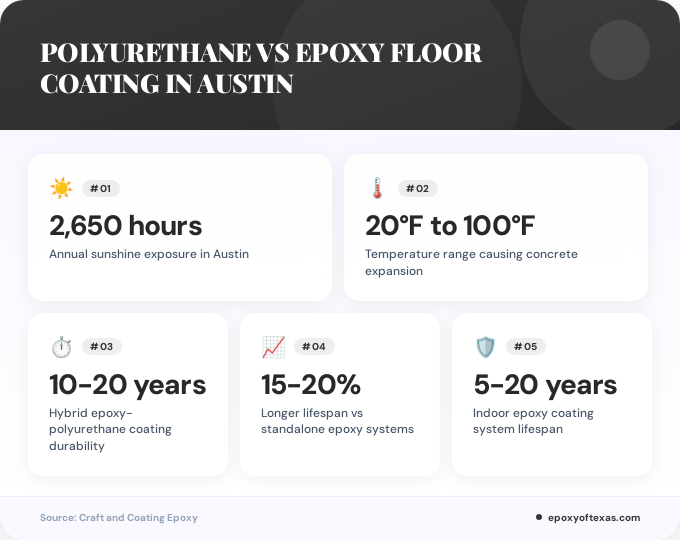
Recent industry data shows that hybrid coating systems combining epoxy with polyurethane or polyaspartic topcoats are projected to dominate garage flooring installations through 2026, offering 15 to 20% longer lifespan compared to standalone epoxy systems. Understanding the distinct advantages of each coating type helps homeowners and businesses in Austin make informed decisions that balance upfront investment with long-term performance.
Why Austin’s Climate Matters for Floor Coating Selection
Austin’s subtropical climate presents unique challenges for floor coatings that don’t affect homeowners in cooler regions. Our city experiences temperature swings from the 20°F range in rare winter cold snaps to over 100°F during extended summer heat waves.
These dramatic temperature fluctuations cause concrete slabs to expand and contract significantly. Rigid coating systems can crack under this stress, while flexible coatings accommodate the movement. Additionally, Austin receives approximately 2,650 hours of sunshine annually, creating intense UV exposure that degrades certain coating chemistries.
For homeowners considering driveway epoxy coating in Austin TX or outdoor applications, UV resistance becomes the primary selection criterion. Neighborhoods like Tarrytown, Hyde Park, and Mueller with abundant tree cover may experience less UV degradation than properties in newer developments with minimal shade.
What Is Epoxy Floor Coating and How Does It Perform?
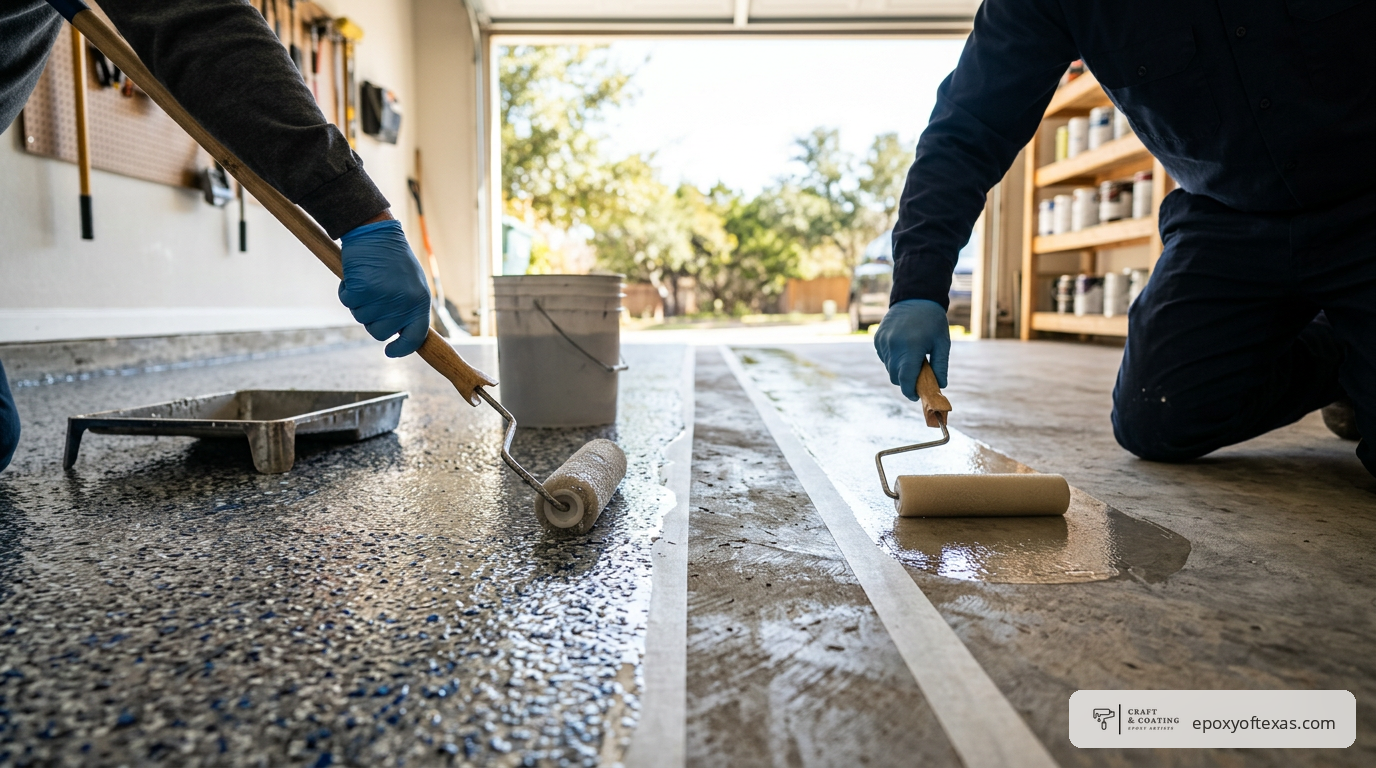
Epoxy floor coatings consist of a two-part system mixing resin and hardener that chemically bond to concrete surfaces. Once cured, epoxy creates an exceptionally hard, durable surface with outstanding chemical resistance that makes it ideal for garage floors exposed to motor oil, antifreeze, and battery acid.
The primary advantages of epoxy include superior compressive strength that withstands heavy vehicle loads and impact resistance that protects against dropped tools and equipment. Professional epoxy floor coating services in Austin typically deliver systems lasting 5 to 20 years indoors when properly installed and maintained.
However, epoxy has one critical weakness for Austin applications: poor UV stability. According to industry testing on UV exposure effects, epoxy coatings yellow, chalk, and lose gloss when exposed to direct sunlight. This makes standalone epoxy unsuitable for outdoor patios, exposed driveways, or garages with large windows unless protected by a UV-resistant topcoat.
The cure time for epoxy typically ranges from 3 to 7 days for full hardness, though light foot traffic may be allowed after 24 to 48 hours. This extended cure period requires careful planning for garage floor epoxy in Austin TX installations to minimize disruption.
What Is Polyurethane Floor Coating and When Should You Choose It?
Polyurethane floor coatings represent a more advanced chemistry that offers exceptional flexibility and UV resistance. While epoxy creates a rigid, glass-like surface, polyurethane remains somewhat elastic, allowing it to move with concrete as it expands and contracts with temperature changes.
This flexibility makes polyurethane the superior choice for Austin’s temperature extremes. Polyurethane systems can withstand temperatures ranging from -40°C to 130°C without cracking or delaminating, perfectly suited to our hot summers and occasional winter freezes.
The UV resistance of polyurethane sets it apart for outdoor applications. Unlike epoxy that degrades in sunlight, polyurethane maintains its color, gloss, and structural integrity even with constant sun exposure. This makes it ideal for patio epoxy coating in Austin TX and other outdoor surfaces where appearance matters.
Polyurethane also cures faster than epoxy, reaching full hardness in just 1 to 3 days and allowing light foot traffic within 24 hours. This shortened timeline reduces project disruption and gets your space back in service sooner.
How Do Epoxy and Polyurethane Compare in Key Performance Areas?
Understanding the specific performance characteristics of each coating type helps match the right product to your application. The following comparison highlights critical differences based on comprehensive flooring system performance analysis:
| Performance Factor | Epoxy | Polyurethane |
|---|---|---|
| Durability Lifespan | 5-20 years indoors | 10-20 years indoor/outdoor |
| Flexibility | Rigid, prone to cracking | Highly flexible, crack-resistant |
| UV Resistance | Poor, yellows in sunlight | Excellent, no fading |
| Chemical Resistance | Outstanding vs. oils/acids | Very good, better vs. solvents |
| Cure Time | 3-7 days full cure | 1-3 days, traffic in 24 hours |
| Temperature Range | Limited thermal expansion tolerance | -40°C to 130°C range |
| Hardness | Higher initial hardness | 50-80 Shore D (slightly softer) |
For abrasion resistance, both coatings perform well, though polyurethane typically outlasts epoxy in high-traffic areas due to its elastic properties that distribute impact forces rather than absorbing them rigidly. This makes polyurethane particularly suitable for commercial applications and busy residential garages.
Chemical resistance favors epoxy for automotive fluids and industrial chemicals, making it the preferred choice for concrete coating in Austin TX garages and workshops. However, polyurethane offers superior resistance to certain solvents and acidic compounds, creating application-specific advantages.
What Are the Cost Differences Between Epoxy and Polyurethane in Austin?
Cost considerations extend beyond initial installation to include long-term maintenance and recoating requirements. Pricing for professional floor coating systems in Austin varies widely based on surface preparation needs, square footage, coating complexity, and quality of materials selected.
Epoxy systems generally present a lower upfront investment, making them budget-friendly for large areas like commercial warehouses or multi-car garages. Material costs for quality epoxy typically run less than polyurethane, and installation labor requirements are comparable.
Polyurethane carries a higher initial price point but often proves more economical over 10 to 15 years due to extended lifespan and reduced recoating frequency. When you factor in fewer maintenance cycles and superior performance in Austin’s challenging climate, the total cost of ownership frequently favors polyurethane for outdoor applications.
Pricing for complete systems can range from $3,000 to $15,000+ for residential garages and $10,000 to $50,000+ for commercial installations, depending on your specific project scope, surface condition, desired finish complexity, and coating system selection. Premium systems incorporating metallic effects, decorative flakes, or specialized performance additives command higher investment but deliver exceptional durability and aesthetics.
For accurate budgeting, professional coating specialists evaluate your specific substrate condition, usage requirements, and aesthetic goals to provide custom quotes that reflect the true scope and quality of work required for lasting results.
Which Coating Works Best for Different Austin Applications?
Selecting the optimal coating system depends on environmental exposure, usage patterns, and performance priorities for your specific application. Understanding how professionals match coatings to applications helps ensure successful outcomes.
Garage Floors: Indoor garage applications in Austin perform well with either coating, though the choice depends on window exposure. Garages with minimal natural light benefit from epoxy’s superior chemical resistance and lower cost. For garages with large windows or doors left open during the day, adding a polyurethane topcoat protects against UV degradation while maintaining epoxy’s chemical-resistant foundation.
Driveways: Exposed driveways require UV-resistant coatings, making polyurethane or polyaspartic systems the clear choice. The flexibility of polyurethane also accommodates the thermal expansion that occurs when dark-colored driveways absorb intense Texas summer heat. Many Austin homeowners discover that proper surface preparation proves as critical as coating selection when learning how to prepare garage floor for epoxy in Texas.
Patios and Outdoor Entertainment Areas: Outdoor living spaces demand coatings that resist UV exposure, temperature extremes, and moisture. Polyurethane excels in these applications, maintaining color stability and structural integrity despite constant sun exposure. The polyaspartic coating options in Austin TX offer even faster cure times while delivering comparable UV resistance for projects requiring minimal downtime.
Commercial and Industrial Facilities: Heavy industrial environments with chemical exposure, forklift traffic, and point loading benefit from thick epoxy base systems. However, facilities with skylights or outdoor loading areas should incorporate polyurethane topcoats to prevent yellowing and maintain professional appearance. Detailed guidance on industrial floor coating in Austin addresses specific performance requirements for manufacturing and warehouse applications.
Why Are Hybrid Epoxy-Polyurethane Systems Becoming Popular?
Industry professionals increasingly recommend hybrid coating systems that leverage the strengths of both chemistries while minimizing their weaknesses. These systems typically apply a thick epoxy base coat for chemical resistance and bonding strength, topped with a polyurethane or polyaspartic finish for UV protection and enhanced durability.
According to recent manufacturing sector analysis, hybrid systems are projected to deliver 15 to 20% longer service life compared to single-coating approaches. This extended performance particularly benefits Austin properties where UV exposure would quickly degrade standard epoxy while full polyurethane systems might exceed budget constraints.
The layered approach also allows customization of appearance with decorative epoxy base coats featuring color flakes, metallic pigments, or geometric patterns, protected by a clear polyurethane topcoat that maintains the aesthetic while providing weather resistance.
Installation sequencing matters significantly for hybrid systems. Proper timing between epoxy base cure and polyurethane topcoat application ensures optimal chemical bonding between layers. Professional installers understand that rushing this process or applying topcoats before epoxy reaches the appropriate cure stage can lead to delamination or poor adhesion.
For Austin homeowners interested in exploring decorative options, information on metallic epoxy floor cost and benefits in Austin demonstrates how artistic base coats protected by UV-resistant topcoats create stunning, durable surfaces suitable for both indoor and covered outdoor spaces.
Key Takeaways
- Climate drives coating selection: Austin’s intense UV exposure and temperature extremes (20°F to 100°F+) make polyurethane superior for outdoor applications while epoxy excels indoors with chemical exposure.
- Hybrid systems optimize performance: Combining epoxy base layers with polyurethane topcoats delivers 15-20% longer lifespan while balancing cost, chemical resistance, and UV protection for Austin conditions.
- UV resistance separates the coatings: Polyurethane maintains color and structural integrity in sunlight while standalone epoxy yellows and chalks within 12-18 months of outdoor exposure.
- Flexibility matters in Texas: Polyurethane’s elastic properties accommodate concrete expansion/contraction from temperature swings, preventing the cracking common with rigid epoxy systems.
- Cost analysis requires long-term perspective: Polyurethane’s higher upfront investment ($3,000-$15,000+ residential, $10,000-$50,000+ commercial) often proves economical over 10-15 years through reduced recoating frequency and superior durability.
- Application-specific selection delivers best results: Garages benefit from chemical-resistant epoxy, driveways require UV-stable polyurethane, and commercial facilities optimize performance with hybrid systems matched to specific exposure and usage patterns.
- Professional installation ensures longevity: Proper surface preparation, timing between coating layers, and quality materials determine whether systems achieve the projected 10-20 year lifespan or fail prematurely.
People Also Ask
Can you apply polyurethane over epoxy floor coating?
Yes, polyurethane can be applied over properly cured epoxy to create a hybrid system that combines epoxy’s chemical resistance with polyurethane’s UV stability. The epoxy must reach appropriate cure stage before topcoat application to ensure proper bonding, typically 24-48 hours depending on temperature and product specifications.
How long do epoxy and polyurethane floor coatings last in Austin?
Indoor epoxy coatings typically last 5-20 years in Austin depending on traffic and maintenance, while outdoor epoxy degrades much faster due to UV exposure. Polyurethane systems deliver 10-20 years of performance in both indoor and outdoor applications when professionally installed, with hybrid systems often exceeding these ranges.
Which coating is better for hot climates like Austin?
Polyurethane outperforms epoxy in hot climates due to its flexibility that accommodates thermal expansion and superior UV resistance that prevents degradation from intense sunlight. For areas with both heat and chemical exposure, hybrid systems with epoxy base and polyurethane topcoat deliver optimal performance in Austin’s climate.
Does polyurethane yellow like epoxy in sunlight?
No, polyurethane floor coatings maintain their color stability and do not yellow when exposed to UV radiation, unlike epoxy which begins showing noticeable yellowing within 12-18 months of outdoor sun exposure. This UV stability makes polyurethane the preferred choice for Austin driveways, patios, and sunlit garages.
What is the main disadvantage of polyurethane floor coating?
The primary disadvantage of polyurethane floor coating is its higher upfront cost compared to epoxy, though this is often offset by longer lifespan and reduced maintenance over time. Polyurethane also has slightly lower initial hardness than epoxy, though its flexibility often results in better overall durability in real-world applications.
Can I install floor coating myself or should I hire professionals in Austin?
While DIY coating products exist, professional installation ensures proper surface preparation, moisture testing, and application techniques critical for Austin’s climate challenges. Professionals achieve superior bonding, uniform thickness, and appropriate cure conditions that dramatically impact system longevity, typically justifying the investment for lasting results.
Frequently Asked Questions
How much does polyurethane vs epoxy floor coating cost in Austin?+
Pricing varies widely based on project scope, surface condition, and coating system complexity, ranging from $3,000 to $15,000+ for residential applications and $10,000 to $50,000+ for commercial projects. Epoxy systems typically cost less upfront, while polyurethane requires higher initial investment but often delivers better long-term value through extended lifespan and reduced maintenance in Austin’s challenging climate.
Which floor coating resists hot tire pickup in Austin garages?+
Both epoxy and polyurethane resist hot tire pickup when properly formulated and fully cured, though polyurethane’s flexibility gives it a slight advantage in extreme heat. The key factor is allowing complete cure before parking hot vehicles, as partially cured coatings of either type may soften under heated tires during Austin’s 100°F+ summer days.
How do I maintain epoxy and polyurethane floor coatings?+
Both coating types require similar basic maintenance including regular sweeping or dust mopping to remove abrasive debris and periodic damp mopping with pH-neutral cleaners. Avoid harsh chemicals, abrasive scrubbers, and de-icing salts that can damage either coating type, and address spills promptly to prevent staining or chemical damage.
What surface preparation is required for floor coatings in Austin?+
Proper surface preparation includes cleaning to remove oils and contaminants, repairing cracks and spalls, mechanical grinding or acid etching to open concrete pores for bonding, and moisture testing to ensure the slab is suitable for coating. Austin’s limestone-rich soil can create moisture issues that must be addressed before coating application to prevent delamination.
Can floor coatings be applied in Austin’s summer heat?+
Yes, but extreme heat requires special considerations as high temperatures accelerate cure times and can cause application issues. Professional installers adjust product ratios, work during cooler morning hours, and may use climate-controlled environments for optimal application conditions during Austin’s hottest months when concrete surface temperatures can exceed 120°F.
Are there low-VOC or eco-friendly coating options available?+
Yes, 100% solids epoxy systems emit zero VOCs during application, while water-based polyurethane formulations offer reduced environmental impact compared to solvent-based products. These eco-friendly options maintain performance while improving indoor air quality during and after installation, making them suitable for occupied residential and commercial spaces in Austin.
How soon can I use my garage or floor after coating installation?+
Polyurethane coatings typically allow light foot traffic within 24 hours and full vehicle use in 1-3 days, while epoxy requires 24-48 hours for foot traffic and 3-7 days before parking vehicles or placing heavy loads. Austin’s high temperatures can accelerate cure times slightly, but following manufacturer recommendations ensures optimal hardness and durability regardless of coating type.