
Metallic Epoxy Floor vs Standard Epoxy in Texas: Which Solution Is Right for Your Space?
Quick Answer
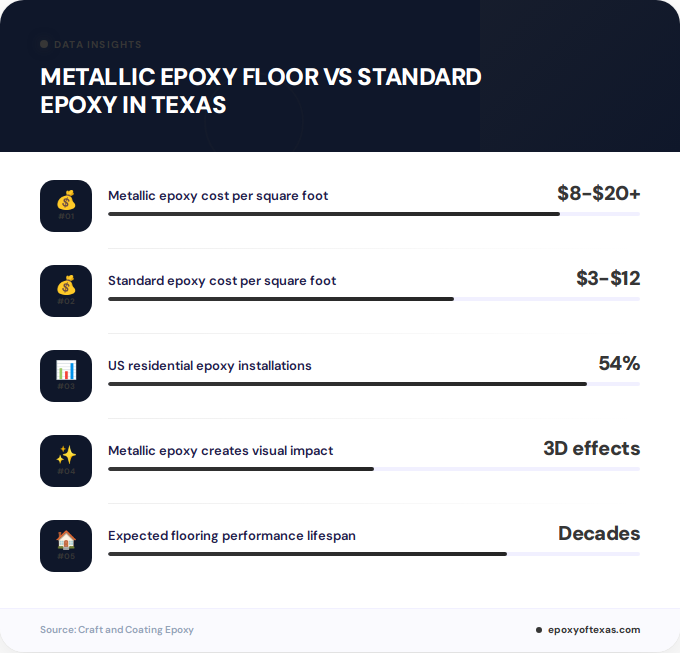
Metallic epoxy floors create stunning three-dimensional effects with pearlescent pigments and cost $8 to $20+ per square foot, while standard epoxy offers durable solid colors or flake systems at $3 to $12 per square foot. In Texas, your choice depends on aesthetic goals, budget, and application, with metallic finishes ideal for showrooms and residential spaces seeking visual impact, and standard epoxy perfect for garages and commercial areas prioritizing durability and functionality.
When Texas homeowners and business owners search for premium flooring solutions, they often face a compelling decision: should they invest in the eye-catching shimmer of metallic epoxy or the proven reliability of standard epoxy? This choice impacts not just your initial investment, but also the long-term value, maintenance, and aesthetic appeal of your space.
With over 54% of epoxy flooring installations now happening in residential garages and commercial spaces across the United States, according to recent epoxy flooring industry statistics, understanding the distinctions between these two systems has never been more critical. In Texas specifically, where extreme temperature fluctuations and unique climate conditions demand durable solutions, making an informed choice ensures your flooring investment performs beautifully for decades.
Whether you’re renovating a garage in Austin, upgrading a retail space in Houston, or designing a custom home in San Antonio, this comprehensive guide will equip you with the knowledge to select the perfect epoxy system for your specific needs.
What Is Metallic Epoxy Flooring and How Does It Differ From Standard Epoxy?
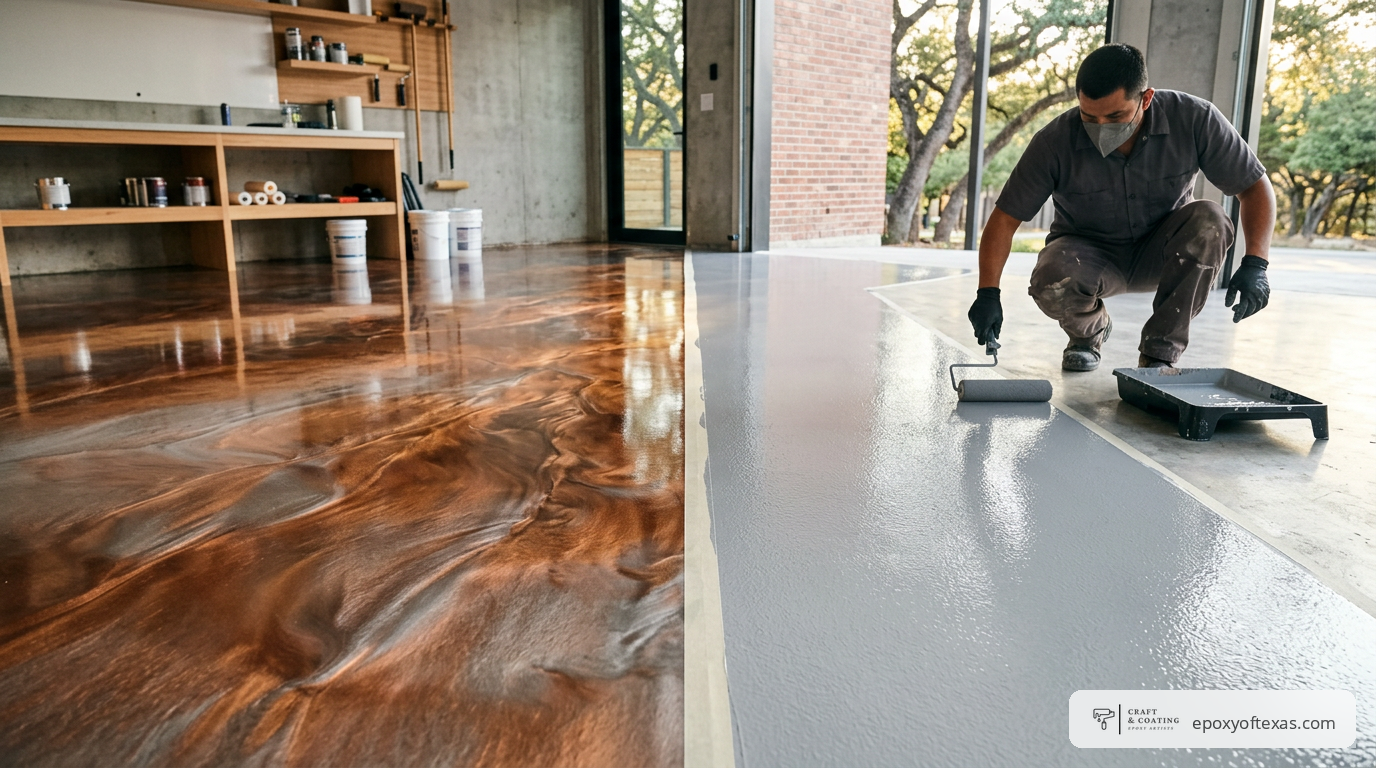
Metallic epoxy flooring represents an artistic evolution in epoxy technology, incorporating pearlescent pigments and specialized application techniques to create stunning three-dimensional effects. Unlike standard epoxy, which typically features solid colors or decorative flakes, metallic systems use a unique chemistry that allows installers to manipulate the coating during application, creating swirls, waves, and marbled patterns that resemble molten metal, flowing lava, or shimmering water.
Standard epoxy systems consist of a two-part resin and hardener mixture that creates a tough, durable surface. These systems have served as the foundation for industrial and commercial flooring for decades, offering exceptional chemical resistance, impact tolerance, and longevity. When you visit professional epoxy installation services, you’ll typically find both options available, each with distinct advantages.
The fundamental chemical difference lies in the viscosity and working time. Epoxy flooring chemistry for metallic systems requires a lower viscosity that allows the metallic pigments to move and settle naturally, creating organic patterns. Standard epoxy formulations are designed for uniform coverage and consistent color distribution.
What Are the Visual and Aesthetic Differences?
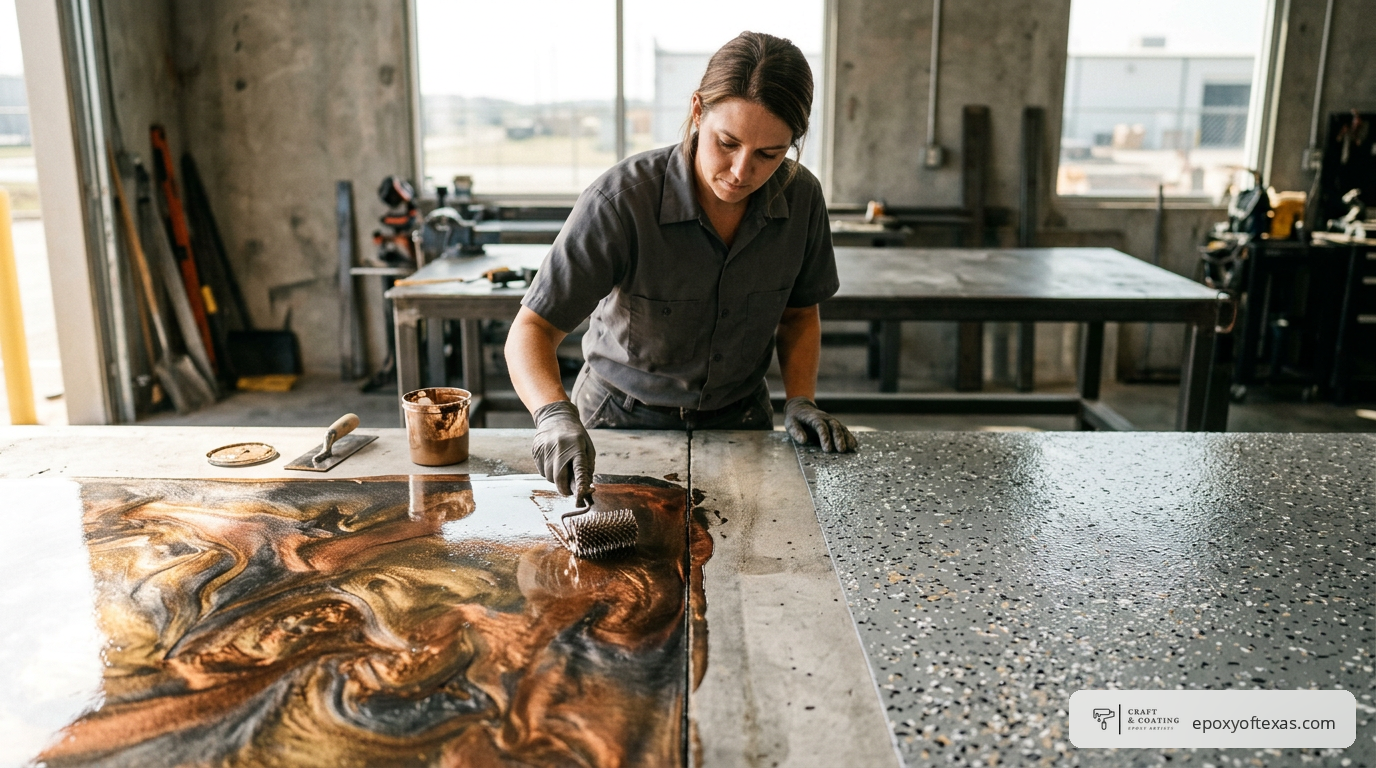
The aesthetic distinctions between metallic epoxy floor vs standard epoxy in Texas are immediately apparent to anyone comparing the two systems side by side. Metallic epoxy creates a living, dynamic surface that shifts and changes appearance based on lighting conditions and viewing angles. This characteristic makes it particularly popular in high-end residential applications, retail showrooms, and hospitality venues where visual impact drives customer experience.
Standard epoxy systems offer a different kind of beauty: clean, professional, and highly customizable through color selection and flake systems. These floors deliver consistency and predictability, with options ranging from high-gloss finishes to slip-resistant textures enhanced with broadcast flakes or quartz aggregates.
| Feature | Metallic Epoxy | Standard Epoxy |
|---|---|---|
| Visual Effect | 3D depth, swirls, unique patterns | Solid color or flake patterns |
| Pattern Consistency | Each floor is unique | Uniform and repeatable |
| Light Reflection | Dynamic shimmer and movement | Consistent gloss level |
| Design Control | Artistic, less predictable | Precise color matching |
According to professional coating design experts, metallic epoxy installations often become the centerpiece of a room’s design, while standard epoxy provides a complementary backdrop that enhances other design elements. This distinction influences how each system should be specified in different environments.
In Texas markets like Austin and Dallas, where modern design aesthetics blend with traditional sensibilities, both systems find their place. Metallic finishes particularly shine in contemporary homes and upscale commercial spaces, while standard epoxy remains the workhorse for functional applications where durability outweighs decorative concerns.
How Do They Compare in Durability and Performance?
When evaluating metallic epoxy floor vs standard epoxy in Texas from a performance perspective, both systems deliver exceptional durability when properly installed. However, subtle differences in their formulations create variations in how they handle specific challenges.
Standard epoxy systems typically achieve a higher build thickness through multiple coat applications. This thickness directly correlates with impact resistance, chemical tolerance, and overall longevity. Many garage floor coating installations in Texas use standard epoxy with broadcast flakes, creating a system that can withstand dropped tools, hot tire pickup, and automotive fluid spills.
Metallic epoxy systems excel in abrasion resistance and maintain their visual appeal longer because scratches and wear patterns blend into the organic, multidimensional finish. The continuous top coat provides excellent protection, though the thinner initial metallic layer means the overall system may require more careful substrate preparation to achieve optimal performance.
For chemical resistance, standard epoxy formulations often edge out metallic systems due to their higher cross-link density and thicker profiles. This makes them preferable for automotive shops, industrial facilities, and commercial kitchens where aggressive chemicals are regularly encountered.
UV stability represents another consideration. Both systems benefit from polyaspartic or polyurethane topcoats that provide UV protection, but metallic pigments can sometimes shift slightly in direct sunlight exposure over many years. In covered spaces or areas with indirect lighting, this factor becomes negligible.
What Does Each Option Cost in Texas?
The investment required for epoxy flooring varies significantly based on system type, preparation needs, square footage, and project complexity. Understanding these cost structures helps Texas property owners budget appropriately and recognize the value proposition each system offers.
Standard epoxy systems typically range from $3 to $12 per square foot for professional installation, depending on the specific product line, number of coats, and decorative elements like color flakes or quartz aggregates. Basic solid-color systems fall on the lower end, while premium flake systems with multiple coats and polyaspartic topcoats command higher prices.
Metallic epoxy installations generally cost $8 to $20+ per square foot, reflecting the specialized materials, extended labor time, and artistic expertise required. The unique nature of each installation means no two projects carry identical pricing. Factors including desired pattern complexity, color combinations, and surface condition significantly influence final costs.
For perspective, a 500-square-foot garage in Austin might require an investment of $1,500 to $6,000+ for standard epoxy, or $4,000 to $10,000+ for metallic epoxy. These ranges reflect differences in material quality, preparation requirements, and installer expertise. For detailed pricing information specific to your project, review our comprehensive guide on epoxy flooring costs in Texas.
Pricing varies significantly based on your specific project requirements, existing concrete condition, desired finish quality, and geographic location within Texas. We encourage property owners to obtain custom quotes that reflect their unique circumstances rather than relying on generalized estimates. Premium installations deliver superior longevity and visual impact that justify the investment through decades of service.
How Does Texas Climate Affect Your Choice?
Texas presents unique environmental challenges that influence flooring performance and selection. From the humid Gulf Coast regions to the arid West Texas deserts, temperature extremes and moisture conditions vary dramatically across the state.
Temperature fluctuations in Texas commonly span 50 to 60 degrees between winter lows and summer highs. Garage floors in Dallas or Houston might experience surface temperatures exceeding 140°F in summer, while winter nights can drop below freezing. Both metallic and standard epoxy systems handle these swings effectively when properly installed, but substrate preparation becomes absolutely critical.
The concrete moisture vapor transmission issue particularly affects coastal areas where humidity stays elevated year-round. Houston, Galveston, and Corpus Christi installations require moisture mitigation strategies regardless of epoxy type. Proper moisture testing and vapor barrier application prevent delamination and ensure long-term adhesion.
In regions experiencing frequent thermal cycling, the flexibility inherent in quality epoxy systems prevents cracking and disbonding. Both metallic and standard formulations include some degree of flexibility, though specific product selection should account for expected temperature ranges. Learn more about how Texas climate affects epoxy flooring longevity.
UV exposure through garage doors and windows presents another consideration. While neither system degrades structurally under UV radiation when properly topcoated, metallic pigments may shift slightly in appearance over extended exposure periods. High-quality UV-stable topcoats minimize this effect, making both systems suitable for spaces with natural light exposure.
What Is the Installation Process for Each Type?
Understanding the installation methodology helps property owners appreciate the craftsmanship involved and set realistic expectations for project timelines. The process differences between metallic epoxy floor vs standard epoxy in Texas significantly impact labor requirements and project duration.
Standard epoxy installation follows a systematic, predictable workflow. Professional contractors begin with thorough concrete preparation, including diamond grinding or shot blasting to open the concrete pores and remove contaminants. After crack repair and surface profiling, they apply a primer coat, followed by the base epoxy layer. Decorative flakes are broadcast while the base coat remains wet, then excess flakes are removed before applying a clear topcoat.
The entire process for standard epoxy typically requires 2 to 4 days, including cure times between coats. Temperature and humidity conditions in Texas influence cure rates, with cooler winter months sometimes extending timelines slightly.
Metallic epoxy installation demands greater artistry and technical precision. After identical surface preparation, installers mix metallic pigments with the base epoxy and carefully apply it using specialized techniques that encourage the organic movement of pigments. Tools including trowels, rollers, and air blowers manipulate the coating to create desired effects. This artistic phase requires experience and cannot be rushed.
Metallic installations commonly require 3 to 5 days, with the application phase being more labor-intensive. Multiple technicians often work simultaneously to maintain wet edges and create seamless transitions. For a detailed breakdown of the entire process, explore our guide to epoxy flooring installation steps in Texas.
Metallic: Precise profiling, moisture testing
Time: 4-8 hours
Metallic: Artistic manipulation techniques
Time: 2-6 hours
Metallic: Pigment movement, blending
Time: 1-4 hours
Metallic: High-clarity polyurethane
Time: 2-3 hours
Both systems benefit immensely from experienced installation teams. The difference between a mediocre result and an exceptional floor often comes down to contractor expertise. When selecting epoxy flooring contractors in Texas, verify their specific experience with your chosen system type and request portfolio examples.
What Are the Long-Term Maintenance Requirements?
Long-term care represents a critical factor when choosing between metallic epoxy floor vs standard epoxy in Texas. Both systems qualify as low-maintenance compared to other flooring options, but understanding specific care requirements ensures optimal performance and appearance retention.
Standard epoxy floors require straightforward maintenance protocols. Regular dust mopping or sweeping removes abrasive particles that could scratch the surface. Periodic damp mopping with pH-neutral cleaners maintains the finish without degrading the topcoat. Avoid harsh chemicals like degreasers with d-limonene or citrus-based solvents, which can damage epoxy coatings over time.
For flake systems, the textured surface naturally hides minor scratches and wear patterns. This characteristic makes standard epoxy exceptionally forgiving in high-traffic applications. Most Texas homeowners find that weekly cleaning and immediate spill cleanup keep their floors looking new for years.
Metallic epoxy systems benefit from similar cleaning routines but show scratches and wear slightly more visibly due to their smooth, reflective surfaces. The good news is that these marks often blend naturally into the organic patterns, maintaining the floor’s visual appeal. Microfiber mops work particularly well on metallic surfaces, preserving the high-gloss finish.
Both systems may eventually require topcoat reapplication after 5 to 10 years of heavy use, though this varies based on traffic levels and care practices. A fresh topcoat restores the original appearance and protection at a fraction of the complete system replacement cost. For detailed care instructions, review our recommendations for maintaining Austin garage epoxy floors.
Which Epoxy System Is Best for Different Applications?
Selecting the optimal epoxy system depends heavily on the intended application, expected usage patterns, and aesthetic goals. Understanding where each system excels helps property owners make confident decisions aligned with their specific needs.
Standard epoxy excels in:
- Residential garages: Handles hot tire pickup, oil drips, and tool impacts with consistent performance
- Commercial warehouses: Provides durable, easily maintained surfaces for forklift traffic and heavy loads
- Automotive shops: Resists chemicals while offering anti-slip properties through flake systems
- Retail backrooms: Delivers professional appearance at practical price points
- Industrial facilities: Meets demanding performance standards for manufacturing environments
Metallic epoxy shines in:
- High-end residential spaces: Living rooms, kitchens, and basements benefit from artistic impact
- Showrooms and galleries: Creates memorable visual experiences that enhance products on display
- Restaurants and hospitality: Establishes upscale ambiance while maintaining easy-clean surfaces
- Corporate lobbies: Makes powerful first impressions with sophisticated, modern aesthetics
- Residential garages (luxury homes): Transforms functional spaces into design statements
The visual comparison of metallic versus standard epoxy demonstrates how dramatically different the two systems appear in completed installations. This visual distinction often guides final selection more than technical specifications.
In Texas markets, we observe strong demand for metallic epoxy in upscale neighborhoods throughout Austin, Westlake Hills, and North Dallas, where homeowners prioritize distinctive design elements. Standard epoxy dominates in suburban garages, commercial properties, and industrial facilities where performance and value drive decisions.
For those interested in exploring alternatives, our comparison of polyurethane versus epoxy floor coatings provides additional context for selecting the ideal flooring system.
People Also Ask
Is metallic epoxy more expensive than regular epoxy?
Yes, metallic epoxy typically costs $8 to $20+ per square foot compared to $3 to $12 per square foot for standard epoxy. The price difference reflects specialized materials, extended labor time, and the artistic expertise required to create unique metallic patterns.
Can metallic epoxy be used in garages?
Absolutely, metallic epoxy performs excellently in garage environments when properly installed with appropriate topcoats. Many luxury homeowners in Texas choose metallic finishes to transform their garages into showpiece spaces that complement high-end vehicles.
How long does metallic epoxy last compared to standard epoxy?
Both metallic and standard epoxy systems deliver similar lifespans of 15 to 25 years when professionally installed and properly maintained. The longevity depends more on installation quality, substrate preparation, and maintenance practices than on the specific epoxy type.
Does metallic epoxy require special maintenance?
Metallic epoxy maintenance requirements closely mirror standard epoxy care. Regular dust mopping, periodic damp mopping with pH-neutral cleaners, and immediate spill cleanup keep both systems looking excellent for years without special treatments.
Which is more durable: metallic or standard epoxy?
Standard epoxy systems typically offer slightly higher durability due to thicker build profiles, making them ideal for heavy industrial use. However, metallic epoxy provides excellent durability for residential and commercial applications, with the added benefit of hiding wear patterns within its organic finish.
Can you add metallic effects to existing epoxy floors?
While technically possible in some cases, adding metallic effects to existing epoxy floors rarely produces optimal results. The best metallic finishes require proper substrate preparation and specific application techniques from the beginning of installation.
Frequently Asked Questions
What is the best epoxy for Texas weather conditions?+
Both metallic and standard epoxy systems perform excellently in Texas weather when formulated for high-temperature tolerance and properly installed with moisture mitigation. The best choice depends more on your specific application and aesthetic preferences than climate factors, as quality products from both categories handle Texas extremes effectively.
How do I choose between metallic and standard epoxy for my project?+
Consider your budget, desired aesthetic impact, and intended use. Choose metallic epoxy when visual wow-factor matters most and budget allows for premium investment. Select standard epoxy for maximum durability in heavy-use applications, predictable appearance, or when working within tighter budgets while still demanding professional quality.
Will metallic epoxy fade in sunlight exposure?+
High-quality metallic epoxy systems topped with UV-stable polyurethane coatings resist fading and maintain their appearance for decades. Some subtle shifting in metallic shimmer may occur in areas with intense, direct sunlight exposure over many years, but this typically blends naturally with the organic pattern design.
Can I install epoxy flooring myself or should I hire professionals?+
While DIY epoxy kits exist, professional installation delivers dramatically superior results, especially for metallic systems requiring artistic expertise. Proper concrete preparation, moisture testing, and application techniques significantly impact performance and longevity. Most Texas property owners find that professional installation provides better value through guaranteed results and extended warranties.
How soon can I use my floor after epoxy installation?+
Standard epoxy floors typically allow foot traffic after 24 hours and vehicle traffic after 72 hours. Metallic epoxy systems follow similar timelines, though full cure and maximum hardness develop over 7 to 14 days. Texas temperatures influence cure rates, with warmer conditions sometimes accelerating the process.
What preparation is required before epoxy installation?+
Professional preparation includes removing existing coatings, repairing cracks and spalls, diamond grinding or shot blasting to open concrete pores, and thorough cleaning to remove all contaminants. Moisture testing ensures proper conditions for adhesion. This preparation phase critically impacts final results and represents approximately 50% of the total installation effort.
Are epoxy floors slippery when wet?+
High-gloss epoxy surfaces can be slippery when wet, but professional installers address this through appropriate topcoat selection and slip-resistant additives. Standard epoxy flake systems naturally provide excellent traction. Metallic floors can incorporate slip-resistant topcoats that maintain visual appeal while ensuring safe traction in all conditions.
Key Takeaways
- Visual distinction: Metallic epoxy creates three-dimensional artistic effects with shimmering pigments, while standard epoxy offers solid colors or flake patterns with predictable, uniform appearance.
- Investment range: Standard epoxy costs $3 to $12 per square foot, making it accessible for various budgets, while metallic systems range from $8 to $20+ per square foot, reflecting premium materials and specialized installation expertise.
- Performance comparison: Both systems deliver 15 to 25 years of service life in Texas environments when professionally installed, with standard epoxy offering slightly higher chemical resistance and metallic systems better concealing wear patterns.
- Application suitability: Standard epoxy excels in garages, warehouses, and industrial settings prioritizing durability and function, while metallic finishes transform showrooms, high-end residences, and hospitality spaces into design statements.
- Texas climate considerations: Both systems handle extreme temperature fluctuations effectively, though proper moisture mitigation and UV-stable topcoats ensure optimal performance across all Texas regions.
- Installation complexity: Metallic epoxy requires 3 to 5 days and artistic expertise for optimal results, while standard epoxy follows more straightforward 2 to 4 day timelines with predictable outcomes.
- Maintenance simplicity: Both systems qualify as low-maintenance flooring options, requiring only regular dust mopping and periodic cleaning with pH-neutral solutions to maintain their appearance for decades.
Making Your Final Decision
Choosing between metallic epoxy floor vs standard epoxy in Texas ultimately depends on balancing aesthetic aspirations, functional requirements, and investment parameters. Both systems represent significant upgrades over bare concrete, delivering beauty, durability, and long-term value that enhance property appeal and usability.
For Texas property owners prioritizing visual impact and willing to invest in distinctive design elements, metallic epoxy transforms ordinary spaces into extraordinary showcases. The organic patterns and luminous depth create conversation-starting floors that maintain their appeal through decades of service.
Conversely, standard epoxy delivers unmatched reliability and versatility for applications where consistent performance matters most. The combination of proven durability, straightforward maintenance, and accessible pricing makes it the foundation of countless successful flooring projects across residential, commercial, and industrial properties throughout Texas.
Neither choice represents a compromise. Both metallic and standard epoxy systems, when professionally installed using premium materials and proper techniques, deliver transformative results that exceed expectations. The decision comes down to which attributes, visual or functional, align most closely with your specific project goals.
We encourage Texas property owners to consult with experienced professionals who can assess your specific concrete conditions, understand your design vision, and recommend the optimal system for your needs. Quality installation makes the difference between good results and exceptional floors that serve beautifully for generations.
Ready to transform your space with professional epoxy flooring? Whether you choose the artistic brilliance of metallic finishes or the proven performance of standard systems, the investment in quality materials and expert installation pays dividends through decades of satisfaction. Contact professional metallic epoxy floor specialists today to discuss your project and receive a custom quote tailored to your specific requirements.