
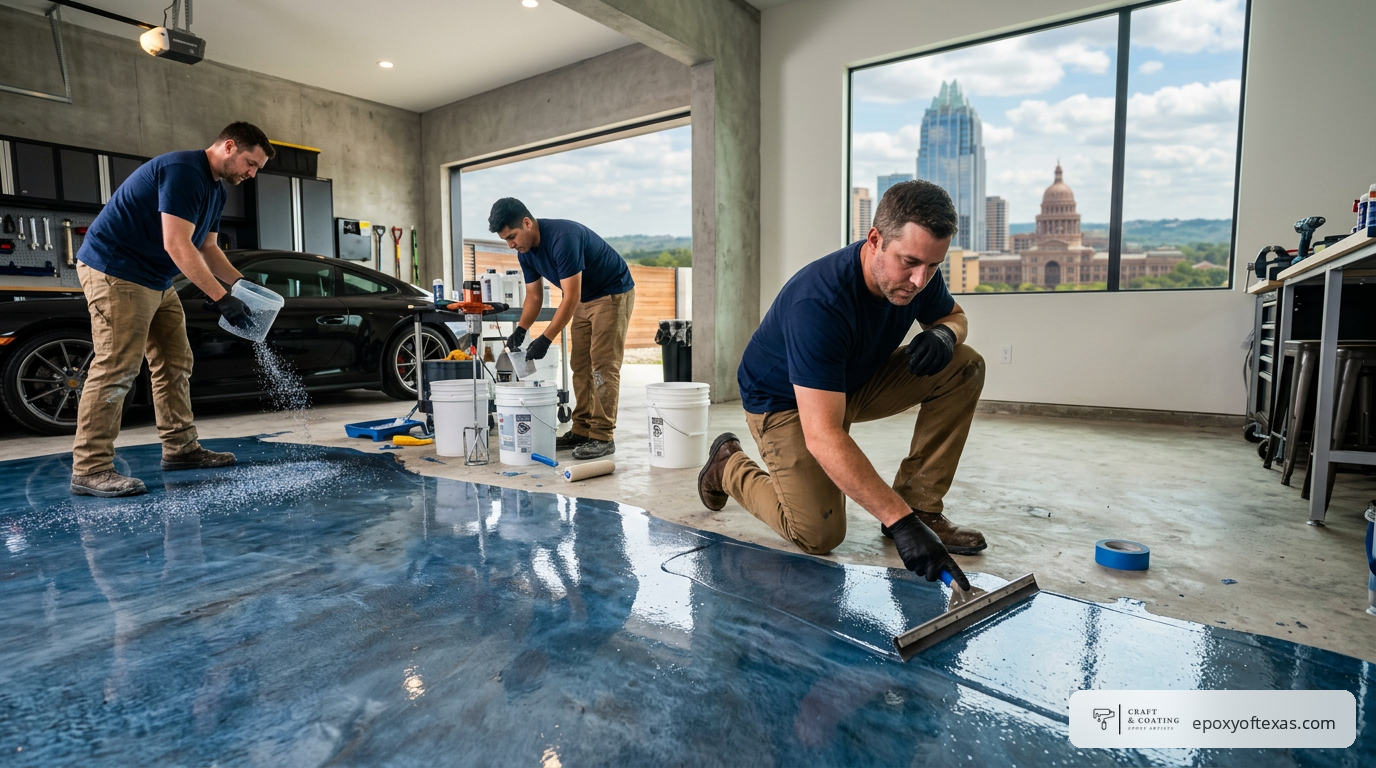
Epoxy Flooring Austin Texas Contractors: Your Complete 2026 Guide to Professional Installation
Quick Answer
Austin, Texas hosts over 127 BBB-listed epoxy flooring contractors specializing in garage, commercial, and industrial applications. Established firms like Texas Tough Tops (20+ years in operation), GarageExperts of Southwest Austin, and Epoxy Elites offer professional installations with lifespans of 10-20+ years when properly applied, covering Travis, Williamson, and Hays counties with services ranging from 100% solids epoxy to metallic and polyaspartic coatings.
Did you know that Austin’s construction boom has generated demand for over 127 specialized epoxy flooring contractors serving the metro area alone? The capital of Texas isn’t just growing in population. It’s experiencing unprecedented demand for durable, high-performance flooring solutions that can withstand Central Texas’ unique climate challenges and diverse application needs.
Whether you’re a homeowner looking to transform your garage, a warehouse manager seeking industrial-grade protection, or a restaurant owner needing chemical-resistant surfaces, understanding the landscape of epoxy flooring Austin Texas contractors is essential for making an informed decision. This comprehensive guide draws on real market data, established contractor profiles, and expert insights to help you navigate your options in Austin’s competitive epoxy flooring market.
What Makes Austin’s Epoxy Flooring Market Unique?
Austin’s epoxy flooring market stands out due to several geographic and economic factors. The region’s hot summers, occasional freeze events, and high humidity create specific demands for flooring systems that can handle temperature fluctuations and moisture exposure. With the metropolitan area spanning Travis, Williamson, and Hays counties, contractors must serve diverse environments from urban warehouses in downtown Austin to residential garages in Lake Travis and Bee Cave.
The city’s rapid expansion has fueled demand across multiple sectors. According to verified contractor directories, Austin’s epoxy flooring market includes specialized providers for garage transformations, commercial spaces, and heavy-duty industrial facilities. This diversity requires contractors to maintain expertise across multiple coating types, from decorative metallic finishes to chemical-resistant industrial systems.
Central Texas’ climate particularly influences material selection. The region’s temperature swings require coatings that maintain flexibility without cracking, while high UV exposure in outdoor-adjacent spaces demands formulations that resist yellowing. These factors make professional installation with region-appropriate materials especially critical for long-term performance.
Who Are the Leading Epoxy Flooring Contractors in Austin?
The Austin market features established epoxy flooring specialists with proven track records. Texas Tough Tops, based in Lakeway, has operated for over 20 years since 2004, serving Austin, Spicewood, Lake Travis, Bee Cave, Dripping Springs, Leander, and Cedar Park. Their longevity in the market demonstrates sustained expertise and customer satisfaction across both residential and commercial applications.
GarageExperts of Southwest Austin specializes in Garage FX epoxy and polyaspartic coatings for residential, commercial, and industrial clients. They offer free on-site estimates at (512) 886-9898 and provide comprehensive service throughout the greater Austin area. Their focus on both epoxy and faster-curing polyaspartic systems reflects the industry shift toward versatile coating options.
Epoxy Elites brings certified expertise in ESD (electrostatic discharge) flooring and traditional epoxy systems across Central Texas. Their capability to handle projects of all sizes, from small residential garages to large-scale industrial installations, positions them as a versatile option for diverse client needs. Specialized contractors like Epoxy Elites demonstrate the technical sophistication required for modern epoxy applications.
| Contractor | Years in Business | Service Areas |
|---|---|---|
| Texas Tough Tops | 20+ years (since 2004) | Austin, Lakeway, Lake Travis, Bee Cave, Cedar Park |
| GarageExperts Southwest Austin | Established franchise | Greater Austin metro |
| Epoxy Elites | Certified specialists | Central Texas, Austin metro |
Additional verified contractors include Wise Coatings (ZIP 78746), Statewide Striping & Epoxy (ZIP 78752), and Foxy Epoxy Floors, all listed through the Better Business Bureau’s 127+ epoxy flooring providers serving the Austin area. This competitive landscape ensures homeowners and businesses have multiple options for obtaining quotes and comparing services.
For specialized industrial applications, many Austin contractors also offer expertise in industrial-grade epoxy flooring systems designed for warehouses, manufacturing facilities, and high-traffic commercial environments.

What Types of Epoxy Flooring Systems Are Available?
Austin’s epoxy flooring contractors offer diverse coating systems to match specific performance requirements and aesthetic preferences. Understanding these options is essential for selecting the appropriate solution for your project.
100% Solids Epoxy represents the premium standard for durability and chemical resistance. This formulation contains no volatile organic compounds (VOCs) and cures to a thick, protective layer ideal for garages, workshops, and light commercial applications. Its robust nature makes it particularly suitable for Austin’s climate extremes.
Metallic Epoxy has gained significant popularity for its unique visual appeal. These systems incorporate metallic pigments that create dynamic, three-dimensional effects resembling marble, flowing water, or molten metal. Many homeowners choose metallic epoxy flooring options for showroom-quality garage floors and entertainment spaces.
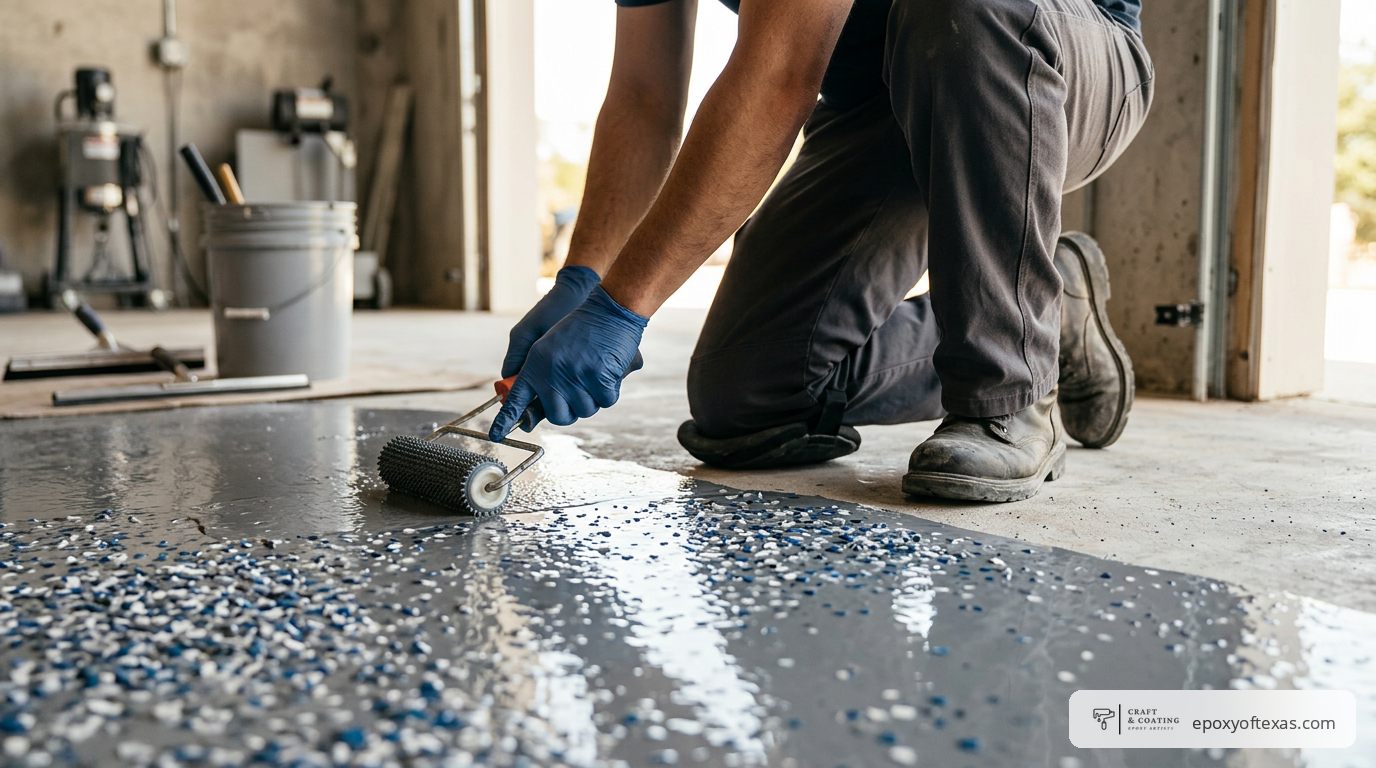
Flake Epoxy Systems combine a solid base coat with decorative vinyl chips or flakes broadcast across the surface before applying a clear topcoat. This multi-layer approach provides excellent slip resistance, hides minor surface imperfections, and offers unlimited color customization. The texture makes flake systems particularly suitable for high-traffic areas where safety is paramount.
Polyaspartic Coatings represent the latest advancement in floor coating technology. These fast-curing systems can be applied and ready for traffic within 24 hours, compared to several days for traditional epoxy. Their rapid cure time minimizes business disruption for commercial clients and allows homeowners to use their spaces sooner.
Specialized applications include self-leveling epoxy for creating perfectly smooth surfaces over damaged concrete, mortar epoxy for filling cracks and divots, and ESD epoxy for electronics manufacturing facilities requiring static dissipation. For businesses requiring specific performance characteristics, contractors can formulate commercial-grade epoxy systems tailored to operational demands.
How Do You Choose the Right Epoxy Contractor?
Selecting among Austin’s many epoxy flooring contractors requires evaluating multiple factors beyond initial price quotes. Industry experts emphasize that installation quality directly determines long-term performance and lifespan.
First, verify licensing and insurance credentials. All reputable contractors maintain proper liability insurance and workers’ compensation coverage. The Better Business Bureau and professional platforms like Thumbtack’s verified Austin epoxy specialists conduct background checks and verify credentials before listing contractors.
Request detailed written proposals from at least three contractors. These should specify surface preparation methods, coating systems with manufacturer specifications, square footage calculations, and warranty terms. Vague estimates without detailed scope descriptions often lead to disputes and unexpected costs.
Examine portfolio examples and request references from similar projects. A contractor specializing in residential garage floors may lack the equipment and expertise for large industrial installations. Conversely, industrial specialists might not provide the detailed aesthetic finishing expected for showroom environments.
Assess the contractor’s knowledge of proper surface preparation. Experts unanimously agree that preparation determines success, as inadequate subsurface assessment causes the majority of epoxy failures. Quality contractors will discuss moisture testing, surface profiling requirements, and crack repair protocols during initial consultations.
Consider manufacturers and product specifications. Established contractors use proven coating systems from reputable manufacturers rather than generic products. They should explain differences between product lines and why specific formulations suit your application.
For comprehensive guidance on the entire process, review detailed information about professional epoxy flooring installation procedures to understand what quality workmanship entails.
What Do Epoxy Flooring Services Cost in Austin?
Pricing for epoxy flooring in Austin varies significantly based on project scope, coating type, surface condition, and square footage. Understanding cost drivers helps set realistic budgets and evaluate contractor proposals.
Residential garage floor installations typically range from $3,000 to $12,000+ depending on garage size, coating selection, and preparation requirements. Single-car garages with minimal surface issues fall toward the lower end, while multi-car garages requiring extensive crack repair and premium metallic finishes approach higher ranges.
Industry cost analysis indicates commercial and industrial projects span even wider ranges, from $10,000 to $75,000+, reflecting larger square footage, specialized coating requirements, and business-hour constraints that may require night or weekend installation.
Several factors influence final project costs:
- Surface condition: Heavily damaged concrete requiring grinding, crack filling, or moisture mitigation adds substantial preparation costs
- Coating type: Basic solid-color epoxy costs less than metallic or multi-layer flake systems
- Square footage: Larger projects benefit from economies of scale, reducing per-square-foot rates
- Customization: Custom color matching, logos, or intricate designs increase material and labor costs
- Timeline requirements: Rush projects requiring accelerated schedules may carry premium pricing
Pricing varies based on your specific project’s unique requirements, site conditions, and desired outcome. Quality contractors provide transparent, itemized estimates that break down preparation, materials, and labor rather than simple per-square-foot quotes that obscure actual scope. For detailed cost breakdowns and budget planning, consult comprehensive resources about epoxy flooring costs throughout Texas.
Position your project as an investment in long-term value rather than a commodity purchase. Premium installations from experienced contractors deliver 10-20+ years of performance, making upfront investment more cost-effective than cheaper alternatives requiring replacement within 5-7 years. Request custom quotes from multiple contractors to compare value propositions rather than simply selecting the lowest bid.
Why Is Professional Installation Critical?
Epoxy flooring installation is a highly specialized trade requiring technical expertise, proper equipment, and strict process adherence. The difference between professional and amateur application becomes apparent within months as improperly installed systems fail prematurely.
Surface preparation represents the most critical phase. Concrete must be properly profiled through diamond grinding or acid etching to create the mechanical bond necessary for adhesion. Moisture content must be measured and addressed, as trapped moisture causes delamination regardless of coating quality. Professionals use specialized moisture meters and conduct calcium chloride tests to ensure substrate readiness.
Temperature and humidity during application directly affect curing chemistry. Austin’s climate requires contractors to monitor ambient and substrate temperatures, adjusting application timing and product selection accordingly. Summer heat accelerates cure times potentially causing application issues, while winter cold can prevent proper cross-linking.
Mixing ratios must be precisely measured and thoroughly blended. Incomplete mixing creates weak spots that fail under traffic. Professionals use calibrated mixing equipment and strictly follow manufacturer specifications for mix ratios, pot life, and recoat windows.
Application technique affects both appearance and performance. Roller technique, squeegee pressure, and broadcast rates for flake systems require practice and skill. Uneven application creates thickness variations that affect color consistency and wear patterns.
Contractors understand the science behind different coating systems. They know which products bond to specific substrates, how to integrate crack repair into the overall system, and when topcoat selection should prioritize UV resistance versus chemical exposure. This knowledge comes from years of experience across diverse applications. For homeowners preparing spaces for professional installation, detailed guidance on proper garage floor preparation clarifies the complexity involved.
Warranty coverage depends on professional installation. Manufacturers only honor product warranties when application follows their specifications, which DIY installers rarely achieve. Professional contractors provide workmanship warranties alongside manufacturer product guarantees, offering comprehensive protection.
What Are the Latest Industry Trends in 2026?
Austin’s epoxy flooring market reflects several emerging trends driven by technological advancement and evolving customer preferences. Understanding these developments helps property owners make forward-looking decisions.
Polyaspartic adoption continues accelerating as contractors and clients recognize benefits beyond fast cure times. These systems offer superior UV resistance compared to traditional epoxy, preventing the yellowing common in garage doors and outdoor-adjacent spaces. Their flexibility accommodates substrate movement better than rigid epoxy, reducing crack-related failures.
Metallic and decorative finishes have expanded beyond luxury applications into mainstream residential projects. Improved pigment technology and application techniques make these distinctive looks more accessible. Homeowners increasingly view garage floors as design elements rather than purely functional surfaces, driving demand for premium metallic epoxy installations.
Antimicrobial additives gain traction in commercial applications, particularly restaurants, healthcare facilities, and food processing. These additives inhibit bacterial growth on floor surfaces, addressing sanitation concerns heightened by recent public health awareness.
Sustainability focus influences product selection as clients request low-VOC and environmentally responsible coating systems. Water-based epoxies and bio-based hardeners reduce environmental impact, though they require expertise to achieve performance matching solvent-based predecessors.
Integration with smart building systems emerges in high-end commercial installations. ESD flooring connects to monitoring systems that track static dissipation performance, while some facilities incorporate floor sensors beneath epoxy coatings for people counting and space utilization analytics.
The contractor landscape also evolves. Established firms invest in advanced equipment like planetary grinders and HEPA dust collection systems that improve surface preparation quality while reducing jobsite disruption. Training and certification programs from coating manufacturers ensure installers stay current with evolving products and techniques.
Service area expansion reflects Austin’s growth patterns. Contractors increasingly serve outlying communities like Hutto, offering specialized epoxy flooring services to rapidly developing suburban markets. Similarly, coverage extends to lakeside communities, with contractors providing expert installation services in Lakeway and surrounding Hill Country areas.
People Also Ask
How long does epoxy flooring last in Austin’s climate?
Professional epoxy installations in Austin typically last 10-20+ years when properly maintained. The region’s temperature fluctuations and UV exposure require quality materials and expert installation to maximize lifespan. Regular cleaning and avoiding harsh chemicals extend durability.
Can I install epoxy flooring myself or should I hire a contractor?
Industry experts unanimously recommend professional installation for anything beyond minor chip repairs. The specialized nature of surface preparation, moisture testing, and application technique makes DIY attempts prone to failure through peeling, blistering, or premature wear. Professional contractors have the equipment, materials, and expertise necessary for long-lasting results.
What is the difference between epoxy and polyaspartic coatings?
Epoxy provides excellent adhesion and chemical resistance with cure times of 3-7 days, while polyaspartic coatings cure within 24 hours and offer superior UV resistance. Polyaspartic systems cost more but minimize downtime and resist yellowing better than traditional epoxy. Many contractors now offer hybrid systems combining both technologies.
How do I maintain epoxy flooring after installation?
Regular maintenance includes sweeping or dust mopping to remove abrasive debris, occasional damp mopping with pH-neutral cleaners, and promptly cleaning spills. Avoid harsh chemicals, abrasive scrubbers, and dragging heavy objects that could scratch the surface. Most contractors provide specific maintenance guidelines based on your coating type.
What preparation is required before epoxy installation?
Professional preparation includes removing all items from the space, cleaning oil stains, repairing cracks and spalls, grinding or etching the surface to proper profile, and conducting moisture tests. Contractors handle these steps, but clients should ensure the space is cleared and utilities are accessible before the scheduled installation date.
Are there epoxy options for commercial and industrial applications?
Yes, Austin contractors offer specialized systems for warehouses, manufacturing facilities, restaurants, and retail spaces. These include high-build epoxy for heavy forklift traffic, chemical-resistant formulations for processing facilities, ESD coatings for electronics manufacturing, and antimicrobial systems for food service. Performance specifications vary significantly from residential applications.
Key Takeaways
- Austin hosts over 127 verified epoxy flooring contractors serving Travis, Williamson, and Hays counties, with established firms like Texas Tough Tops operating for 20+ years
- Professional installation is critical for achieving the 10-20+ year lifespan epoxy systems are designed to deliver, as subsurface preparation and application technique directly determine performance
- Multiple coating types are available, including 100% solids epoxy, metallic finishes, flake systems, and fast-curing polyaspartic coatings, each suited to different aesthetic and performance requirements
- Pricing varies widely based on project scope, ranging from $3,000 to $12,000+ for residential garages and $10,000 to $75,000+ for commercial installations, depending on size, condition, and coating selection
- Obtain detailed quotes from at least three contractors, verifying licensing, insurance, and references while comparing specific scope details rather than simply selecting the lowest price
- Industry trends favor polyaspartic adoption, decorative metallic finishes, antimicrobial additives for commercial spaces, and sustainable low-VOC formulations
- Austin’s climate creates specific demands for coatings that handle temperature extremes, humidity, and UV exposure, making professional expertise in material selection essential
Frequently Asked Questions
What areas around Austin do epoxy flooring contractors serve?+
Most Austin epoxy contractors serve the greater metro area including downtown Austin, Lake Travis, Bee Cave, Lakeway, Spicewood, Dripping Springs, Leander, Cedar Park, Round Rock, and Pflugerville. Some specialists extend coverage to Hutto, Georgetown, and other rapidly growing communities across Travis, Williamson, and Hays counties.
How long does epoxy flooring installation take?+
Standard residential garage installations typically require 2-3 days including preparation, application, and cure time. Traditional epoxy needs 3-7 days before accepting vehicle traffic, while polyaspartic systems can be ready within 24 hours. Commercial projects take longer based on square footage and complexity, often scheduled during non-business hours to minimize disruption.
What warranty should I expect from epoxy flooring contractors?+
Reputable contractors provide workmanship warranties ranging from 1-5 years, while manufacturer product warranties typically span 5-15 years depending on the coating system. Warranty coverage requires following maintenance guidelines and excludes damage from abuse, improper use, or substrate failures beyond the contractor’s control.
Can epoxy flooring be applied over existing coatings?+
In most cases, existing coatings must be completely removed to ensure proper adhesion. Contractors use diamond grinding or chemical strippers to remove old epoxy, paint, or sealers before applying new systems. Attempting to coat over existing materials without proper removal leads to delamination and premature failure.
What makes metallic epoxy different from standard epoxy?+
Metallic epoxy incorporates special pigments that create unique three-dimensional effects with depth and movement, resembling marble, water, or molten metal. Application technique manipulates these pigments to create custom patterns. While more expensive than solid-color epoxy, metallic systems provide distinctive aesthetic appeal ideal for showroom-quality spaces.
Is epoxy flooring slippery when wet?+
Smooth epoxy surfaces can be slippery when wet, but contractors add slip-resistant aggregates or texture to topcoats for safety. Flake systems naturally provide better traction than solid-color coatings. For areas exposed to water or oils, contractors recommend anti-slip additives or specialized texturing to meet safety requirements.
How do I get quotes from Austin epoxy flooring contractors?+
Most contractors offer free on-site estimates where they assess your space, discuss options, and provide detailed written proposals. Contact at least three contractors to compare pricing, scope, and warranties. Provide accurate square footage, photos of current conditions, and specific requirements to receive comparable quotes. Expect site visits to take 30-60 minutes for thorough evaluation.
Choosing the right epoxy flooring contractor in Austin requires understanding the local market, evaluating contractor credentials, and matching coating systems to your specific needs. With over 127 verified providers serving the metro area, property owners have access to established specialists with decades of combined experience.
The investment in professional epoxy installation delivers long-term value through durability, low maintenance, and enhanced property appeal. Whether you’re transforming a residential garage, upgrading a commercial showroom, or protecting an industrial facility, Austin’s competitive contractor landscape ensures you can find the expertise necessary for success.
For comprehensive epoxy flooring services delivered by experienced professionals, or to learn more about specific applications and benefits, explore detailed resources at Epoxy of Texas. Take the first step toward transforming your space with a durable, beautiful epoxy floor system designed to last decades.